Emergency Vet in Lucknow
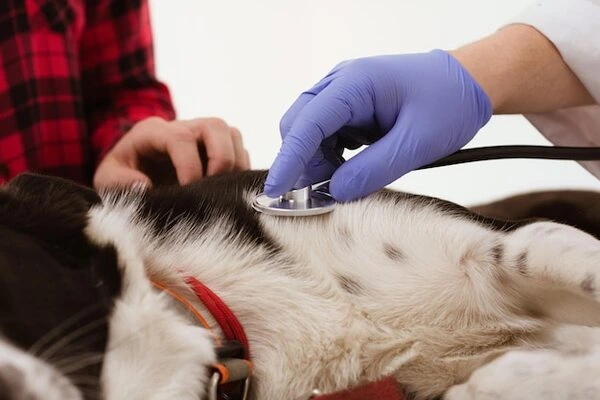
Your pet's health and happiness are our priority. As a leading emergency vet in Lucknow, we bring professional care to you. Our Emergency vet facility in Lucknow is designed to provide a stress-free experience for your beloved furry friends. We use the most advanced medical tools available in the industry to ensure the best outcomes for your pets in Lucknow. Transparency in pricing and procedures makes us a preferred choice for the pet owner community in the area. In critical situations, our emergency team provides immediate stabilization and life-saving treatments for your pets. Our staff in Lucknow is not only professionally trained but also deeply committed to the well-being of every pet. From high-quality diet tips to exercise routines, we offer a complete package for your pet's long-term health. Regular training ensures that our team is updated with the latest advancements in global veterinary medicine. Your companion deserves a healthy life. Let our Emergency vet in Lucknow help them achieve that goal. We also provide detailed guidance on home-based care to help you maintain your pet's health between visits. Our facility is equipped with safe recovery areas and monitoring systems for pets undergoing treatments. Your pet's comfort is our priority, and we go the extra mile to ensure a friendly and welcoming atmosphere.
Emergency Vet Lucknow – Your Complete Guide to Urgent and After-Hours Veterinary Care
A pet emergency in Lucknow — at midnight during the monsoon, during the intense May heat, or on a Sunday when regular clinics are closed — requires immediate clarity about available options and the judgement to make good decisions under significant stress. Lucknow's emergency veterinary landscape is more limited than cities like Chandigarh or Delhi, and being honest about this reality rather than overstating local capability is the most practically useful starting point for this guide. The city does not currently have fully equipped 24-hour specialist animal hospitals of the type available in Delhi, and the nearest advanced specialist emergency facilities require significant journey time — approximately 90 minutes to Kanpur's CVSC or 6-7 hours to Delhi. This reality makes emergency preparedness more critical for Lucknow pet owners than for those in larger, better-equipped cities — the advance preparation described in this guide is not optional guidance but genuinely important planning that can determine whether a pet emergency resolves well or becomes a tragedy in a city where the gap between available local resources and ideal emergency capability is real and must be planned around. This comprehensive guide covers everything Lucknow pet owners need to know — recognising genuine emergencies, understanding what local resources exist and what they can realistically provide, preparing for situations that may require transport beyond the city, the specific emergency risks that Lucknow's environment creates, and the community resources that supplement formal veterinary emergency coverage.
The most important message this guide carries is simple: prepare before any emergency happens. In Lucknow's specific context, advance preparation — knowing the right contacts, understanding the capability limits of local resources, and having a plan for the cases that require Kanpur or Delhi — is the difference between a well-managed crisis and an improvised response whose quality is determined by the chaos of the moment rather than the preparation that preceded it.
Recognising Genuine Veterinary Emergencies
Knowing which situations constitute genuine emergencies requiring immediate action — as distinct from concerning but non-immediately-critical situations that can wait for a morning appointment — is essential knowledge for every Lucknow pet owner. The conditions that require immediate action regardless of hour, weather, or inconvenience include: any breathing difficulty or respiratory distress; collapse or inability to stand; suspected heat stroke (extreme panting, drooling, sudden profound weakness, high body temperature — especially during Lucknow's April-June heat season); suspected Leptospirosis crisis (acute jaundice, kidney failure signs, severe vomiting combined with fever following monsoon flood exposure); tick-borne disease crisis (sudden profound lethargy, pale or white gums, haemorrhage); suspected poisoning; uncontrolled or severe bleeding; abdominal distension with pain or distress in dogs; inability to urinate in male cats; seizures lasting more than five minutes; severe trauma from accidents or falls; and any condition that is rapidly deteriorating regardless of initial severity.
Lucknow's environment creates specific emergency scenarios that deserve particular awareness. The monsoon season brings two specific Lucknow emergency risks that are more relevant here than in most comparable Indian cities: Leptospirosis acute illness following flood water exposure, and severe tick-borne disease presentations following the monsoon season's peak tick transmission period. The summer months bring heat stroke risk that is intensified by Lucknow's humidity — unlike the dry heat of Rajasthan where evaporative cooling works efficiently, Lucknow's humid summer makes physiological heat management more challenging for dogs, and heat stroke can develop at temperatures and with exertion levels that might be manageable in drier conditions. Recognising these Lucknow-specific emergency scenarios early — not waiting for full clinical deterioration before seeking veterinary attention — directly affects outcomes in these time-sensitive conditions.
Lucknow's Emergency Veterinary Options
Lucknow's emergency veterinary coverage is provided primarily by practices that offer extended hours and by the small number of better-equipped clinics whose practitioners are available for after-hours contact in urgent cases for established clients. The honest assessment of this coverage is that it is more limited than in Chandigarh or Delhi, and that genuinely critical emergencies requiring round-the-clock intensive monitoring, advanced surgical capability, or specialist-level management may exceed what is locally available — making the Kanpur and Delhi options part of realistic emergency planning rather than last resorts.
The most practical approach to emergency veterinary access in Lucknow is to identify in advance which clinic in your area of the city provides the most comprehensive after-hours coverage, and to establish a direct relationship with that clinic's practitioners as regular clients whose calls are more likely to receive after-hours personal response. Ask your regular Lucknow veterinarian — at a routine appointment before any emergency — what their personal emergency protocol is for established clients: will they answer calls after hours? Will they return to the clinic for genuine emergencies? Can they provide telephone guidance on whether a situation warrants the Kanpur or Delhi journey? The answers to these questions reveal the practical emergency coverage that formal business hours listings do not.
Emergency Care Costs in Lucknow
| Emergency Service | Cost Range (₹) | Notes for Lucknow pet Owners |
|---|---|---|
| After-hours consultation | ₹400 – ₹1,500 | Emergency premium varies; confirm with clinic in advance |
| Emergency hospitalisation (per day) | ₹2,000 – ₹8,000 | Monitoring and basic medication included |
| Emergency blood panel | ₹500 – ₹2,000 | External lab for most Lucknow clinics; in-house at select facilities |
| Emergency radiograph | ₹500 – ₹2,000 | Available at better-equipped Lucknow clinics |
| IV fluids and supportive care | ₹1,500 – ₹5,000 | Initial stabilisation cost |
| Emergency surgery (moderate) | ₹10,000 – ₹40,000 | Wound repair, basic soft tissue |
| CVSC Kanpur referral consultation | ₹500 – ₹3,000 + transport | Teaching hospital rates; accessible in ~90 minutes |
| Delhi specialist emergency | ₹20,000 – ₹2,00,000+ | For cases requiring specialist care; plan journey in advance |
Lucknow-Specific Emergency Scenarios and Responses
Heat stroke is Lucknow's most seasonally concentrated emergency risk, intensified by the city's summer humidity. The humid heat of Lucknow's May-June peak — where temperatures of 40-42 degrees Celsius are accompanied by significant humidity that reduces evaporative cooling efficiency — creates heat stroke risk at temperature and activity combinations that might be manageable in drier climates. Brachycephalic breeds (Pugs, French Bulldogs, Shih Tzus), heavy-coated dogs, elderly animals, and any dog with cardiovascular or respiratory conditions are at highest risk. The immediate response to suspected heat stroke in Lucknow: move the dog immediately to the coolest available environment — air conditioning on maximum; apply room-temperature water (not ice, which causes vasospasm) to the paws, groin, and neck; transport immediately to the nearest available veterinary facility with vehicle air conditioning running at full. Do not delay transport to continue home cooling — professional emergency management including IV fluid support, oxygen, and monitoring is required for any significant heat stroke presentation.
Leptospirosis acute illness is a Lucknow-specific emergency risk that peaks in the weeks following monsoon flooding. Any dog that has had significant flood water contact and develops acute fever, vomiting, lethargy, jaundice (yellow tinge to gums, skin, or whites of eyes), or signs of kidney involvement (initial increased thirst and urination followed by decreased urination) within 2-4 weeks of the exposure should receive immediate veterinary attention with specific mention of the flood water exposure history. Leptospirosis acute illness can progress rapidly to kidney failure, liver failure, and haemorrhage — early recognition and treatment with appropriate antibiotics alongside supportive care significantly improves outcomes compared to delayed treatment of advanced disease.
Tick-borne disease crisis — most commonly the sudden profound weakness and haemorrhage of acute Babesiosis or the thrombocytopenic bleeding of severe Ehrlichiosis — is a year-round emergency risk for Lucknow dogs with park access, peaking in the post-monsoon period. Sudden profound lethargy, inability to stand, pale or white gums, or spontaneous bleeding in a Lucknow dog should be treated as a tick-borne disease emergency until proven otherwise, with immediate veterinary contact and transport for CBC and tick-borne disease panel.
Emergency Planning Framework for Lucknow Pet Owners
| Preparedness Step | Action | When to Complete |
|---|---|---|
| Identify local emergency contact | Ask regular vet for after-hours protocol; save personal number if offered | At next routine appointment |
| Identify best-equipped Lucknow clinic | Research mid-tier clinic with best diagnostic capability; save contact | Now — before any emergency |
| CVSC Kanpur option | Save CVSC contact; know the Lucknow-Kanpur route; ~90 min journey | Before monsoon season annually |
| Delhi specialist hospital | Identify one Delhi specialist hospital; save contact; know Lucknow-Agra Expressway route | Before acquiring a pet in Lucknow |
| Heat stroke preparation | Know cooling protocol; commit to summer exercise restrictions; identify nearest AC-equipped clinic | Before April each year |
| Leptospirosis and flood preparation | Know Lepto signs; report flood exposure to vet immediately; confirm vaccination currency pre-monsoon | Pre-monsoon — May annually |
| Emergency financial reserve | Maintain ₹20,000 – ₹40,000 reserve or pet insurance; Delhi journeys add transport cost | Before acquiring a pet |
When to Transport to Kanpur or Delhi from Lucknow
The decision framework for transport to Kanpur or Delhi from Lucknow in a veterinary emergency should answer: does the additional resource available at the referral destination genuinely change the diagnosis, treatment approach, or outcome probability in a way that matters for this animal? For cases where Lucknow's better clinics can provide the diagnostic clarity and treatment capability the case requires — tick-borne disease management, wound repair, heat stroke stabilisation, Leptospirosis treatment initiation — local management is appropriate and the transport delay would be counterproductive. For cases where the clinical need exceeds Lucknow's local capability — blood transfusion (if not locally available), complex surgery beyond local scope, imaging requiring CT or MRI, or round-the-clock intensive care monitoring — the transport to Kanpur or Delhi adds genuine value despite the journey.
The Kanpur CVSC route (90 minutes, manageable for most stable emergencies requiring specialist consultation) should be the first-considered step for cases beyond Lucknow's local capability where Delhi-level advanced imaging or the most complex specialist surgery is not the immediate need. The Delhi route (6-7 hours, or 4.5-6 hours by Shatabdi train for stable non-critical cases) should be reserved for cases where CT/MRI imaging, radiation therapy, or the most specialist-level surgery is genuinely required — and for these cases, the journey is worthwhile and the quality of care at Delhi's best animal hospitals justifies the investment.
Community Emergency Resources in Lucknow
Beyond formal veterinary services, Lucknow's active pet owner community and its animal welfare organisations provide emergency support resources that complement the formal veterinary network. People for Animals (PFA) Lucknow, the numerous street animal welfare groups active across the city, and the UP Animal Welfare Board all maintain emergency contacts and can assist with guidance for both owned pet emergencies and injured stray animal encounters. These organisations sometimes provide practical support including transport assistance, veterinary liaison, and community guidance that supplements the formal veterinary access that may be limited during emergency hours in Lucknow's current infrastructure.
The Lucknow pet owner community's social media networks — Facebook groups for pet owners in Gomti Nagar, Indira Nagar, and other residential areas, breed-specific communities, and city-wide pet care groups — function as living emergency information networks. Community members regularly share real-time guidance about which clinic is accessible on a specific night, which practitioners have responded well to after-hours calls, and which specific emergency scenarios they have navigated successfully in Lucknow's specific context. This community knowledge is more current and more locally specific than any guide can be, and connecting with it before any emergency gives you access to the most practically useful emergency resource available to Lucknow's pet owners — the collective experience of fellow animal lovers who have navigated the same city's emergency landscape and are willing to help you do the same.
Frequently Asked Questions About Emergency Veterinary Care in Lucknow
Is there a 24-hour emergency veterinary hospital in Lucknow? Fully equipped 24-hour animal hospitals of the type available in Delhi or Chandigarh are not currently operating in Lucknow. Several clinics offer extended hours and individual practitioners may respond to after-hours calls from established clients. For genuinely critical emergencies requiring overnight monitoring, advanced surgery, or specialist-level care, the options are the best available Lucknow clinic at the time, the CVSC in Kanpur (90 minutes), or Delhi for the most advanced needs. Planning for this reality in advance is essential.
My Lucknow dog collapsed suddenly with pale gums — what should I do right now? This is a genuine emergency. Contact your veterinarian or the nearest emergency clinic immediately — describe the signs (collapsed, pale gums) clearly. Transport immediately, not after waiting to see if recovery occurs. Pale gums with collapse in a Lucknow dog suggests severe anaemia (possible Babesiosis), internal bleeding, or cardiovascular emergency — all of which are time-critical. Do not delay for any reason. At the clinic, insist on immediate CBC and tick-borne disease panel as the first diagnostic priority.
My dog got into flood water during Lucknow's monsoon — when should I be worried? Contact your veterinarian immediately to report the flood water exposure and confirm that Leptospirosis vaccination is current. Monitor the dog closely for 2-4 weeks after exposure for early signs of Leptospirosis: fever, lethargy, loss of appetite, vomiting, increased thirst and urination, or any yellow tinge to gums, skin, or eyes. Any of these signs within this time window should prompt immediate veterinary contact with specific mention of the flood water exposure history. Early treatment of Leptospirosis with appropriate antibiotics dramatically improves outcomes compared to treatment of advanced disease.
How far is Kanpur's veterinary college from Lucknow, and is it useful for emergencies? The CVSC at CSAUA&T in Kanpur is approximately 80 kilometres from Lucknow city centre — roughly 90 minutes by road under normal conditions. It is the most accessible specialist veterinary resource for Lucknow pet owners needing care beyond what the city's private practices provide, and it is appropriate for many complex case consultations and specialist assessments that benefit from academic expertise without requiring the full Delhi journey. For genuine life-threatening emergencies requiring immediate surgical or intensive care intervention, the 90-minute transport to Kanpur is only appropriate for cases that are stable enough to benefit from the better resources at the end of the journey.
Post-Emergency Care in Lucknow
After a pet emergency — whether managed locally in Lucknow, at the CVSC in Kanpur, or at a Delhi specialist hospital — the transition back to routine veterinary care and the management of any ongoing conditions identified during the emergency is an important step that is frequently under-managed. Request a detailed written discharge summary from any emergency facility that covers the diagnosis, treatment delivered, current medications, monitoring requirements, and follow-up schedule. Share this document with your regular Lucknow veterinarian at the first post-emergency appointment and ensure that ongoing management recommendations are incorporated into their care plan.
For emergencies managed in Kanpur or Delhi, the transition back to Lucknow care requires particular attention to continuity — the specialist who managed the emergency may have initiated treatments or monitoring protocols that require ongoing local veterinary management, and the quality of this handover between the referral specialist and the local Lucknow practitioner directly affects the quality of the recovery phase. A well-managed post-emergency transition, with complete documentation flowing between the specialist and local care provider, produces better long-term outcomes than the situation where the emergency is expertly managed but follow-up care returns to the pre-emergency baseline without incorporating what the emergency revealed about the animal's health status. Take responsibility for this continuity as the pet owner — you are the constant across both the specialist and local elements of care, and ensuring that information flows between them is your most practically important post-emergency contribution to your animal's recovery.