Pet Training – Professional Dog & Puppy Training
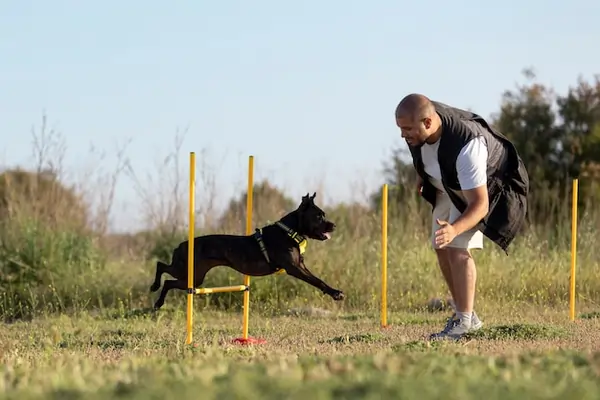
pet training is an important topic for pet lovers and users searching online. This page provides clear and useful information about pet training. Understanding details, care tips, pricing, and basic knowledge helps users make better decisions. Whether you are a beginner or experienced, learning about pet training can improve your overall experience. It is always recommended to check updated information and follow proper guidelines before making any decision. This content is written in simple language to help users easily understand key points. Proper research and awareness will help you choose better options and maintain long term satisfaction. Always focus on quality information and trusted sources for best results.
Pet Training in India – A Complete Guide to Training Your Dog or Cat
pet training is one of the most important investments you can make in the wellbeing of your pet and the quality of your relationship with them. A well-trained pet is a safer pet, a happier pet, and a more welcome member of the household — one that can accompany you to more places, interact safely with more people, and navigate the world with confidence and emotional stability. In India, where pet ownership has grown rapidly and urban living presents specific challenges for pets and their owners, professional pet training services have evolved considerably over the past decade. This comprehensive guide covers everything you need to know about pet training in India — from the fundamentals of how animals learn, to choosing the right training approach, finding qualified trainers in your city, training your pet at home, and addressing common behavioural problems.
It is important to establish from the outset that training is not about control or dominance — modern understanding of animal behaviour has firmly established that the most effective training is built on positive reinforcement, clear communication, and trust. Training is not something you do to your pet; it is something you do with your pet. The process of training, when done correctly, strengthens the bond between owner and animal and creates a relationship built on mutual understanding and respect.
Why Pet Training Is Essential – Not Optional – in Urban India
Many pet owners in India view training as a luxury or as something only needed for "difficult" dogs. This perspective underestimates how central training is to the welfare of pets living in India's busy, complex urban environments. Consider the situations a city dog faces every day: traffic, crowds, other animals, unfamiliar sounds, children approaching suddenly, elevators in apartment buildings, the chaos of festivals and celebrations. A dog that has not been trained to navigate these situations calmly and confidently is a dog under chronic stress.
Training addresses this directly by building confidence, teaching dogs how to respond appropriately to different situations, and establishing the communication tools that allow owner and dog to work together effectively. A dog that reliably comes when called, walks calmly on a leash, and sits on command is a dog that can be safely taken off the elevator, walked past a busy market, and trusted around visiting children. These skills are not luxuries — they are the foundation of a life well-lived for an urban dog in India.
For cats, training is less commonly discussed but equally valuable. Cats can absolutely be trained using positive reinforcement, and a cat that has been trained to come when called, accept handling, travel calmly in a carrier, and cooperate with veterinary examinations is significantly easier and safer to care for throughout its life. Cat training also provides mental enrichment that is particularly important for indoor cats with limited environmental stimulation.
Understanding How Pets Learn – The Science Behind Training
Effective training is grounded in an understanding of how animals actually learn, rather than assumptions about dominance, hierarchy, or punishment. The science of animal learning is well-established and shows clearly that positive reinforcement — rewarding desired behaviours — is both more effective and more humane than punishment-based approaches in producing reliable, sustained behaviour change.
Positive reinforcement works on a simple principle: behaviours that are followed by something the animal values (food, play, praise, access to something they want) are more likely to be repeated. When you consistently reward your dog for sitting when asked, the dog learns that sitting when you ask produces good things and becomes more likely to do so in the future. This is not just theory — it is the same mechanism that underlies all complex learning in animals and humans.
Punishment-based training — using pain, fear, or aversive experiences to suppress unwanted behaviours — has been shown to produce significant negative side effects including fear, anxiety, aggression, and damage to the human-animal bond. It does not teach the animal what to do instead of the unwanted behaviour, it only attempts to suppress what you do not want without building the skills and understanding that allow the animal to succeed. The international veterinary and animal behaviour community has moved decisively away from punishment-based training methods, and this position is supported by a substantial body of peer-reviewed research.
Types of Pet Training Available in India
The pet training landscape in India has diversified considerably, offering options for different needs, budgets, and training goals. Understanding the different types of training available helps you choose the approach most appropriate for your pet and your specific objectives.
| Training Type | Best For | Format | Approx Cost (₹) | Duration |
|---|---|---|---|---|
| Puppy Kindergarten | Puppies 8-16 weeks | Group classes | ₹3,000 – ₹8,000 | 4-6 weeks |
| Basic Obedience | All dogs, any age | Group or private | ₹4,000 – ₹15,000 | 6-8 weeks |
| Advanced Obedience | Dogs with basic foundation | Group or private | ₹6,000 – ₹20,000 | 8-12 weeks |
| Private / Home Training | Dogs with specific issues or busy owners | One-on-one at home | ₹1,000 – ₹3,000 per session | Ongoing as needed |
| Behaviour Rehabilitation | Dogs with aggression, anxiety, or phobias | Private sessions | ₹2,000 – ₹5,000 per session | Ongoing, varies by case |
| Board and Train | Owners with limited time | Residential at trainer's facility | ₹20,000 – ₹60,000 | 2-4 weeks |
| Cat Training | All cats, any age | Private sessions or online | ₹1,500 – ₹4,000 per session | Varies by goals |
Finding a Qualified Pet Trainer in India
The quality of pet trainers in India varies enormously. Unlike veterinary medicine, pet training in India is not a regulated profession — anyone can call themselves a pet trainer without any formal training, certification, or adherence to any professional or ethical standards. This means the burden of assessing trainer quality falls entirely on the pet owner, and doing this due diligence properly is critical to your pet's welfare.
Look for trainers who hold certification from recognised international organisations. The Certification Council for Professional Dog Trainers (CCPDT) and the International Association of Animal Behavior Consultants (IAABC) are the two most respected certifying bodies for professional trainers worldwide. Trainers with CPDT-KA (Certified Professional Dog Trainer – Knowledge Assessed) or CDBC (Certified Dog Behavior Consultant) designations have demonstrated a minimum level of knowledge and commitment to continuing education.
Ask specifically about the trainer's methods and philosophy before booking any sessions. A trainer who uses or advocates for the use of shock collars, prong collars, choke chains, physical corrections, alpha rolls, or any technique that relies on pain or fear to modify behaviour is not operating within current best-practice standards. Thank them for their time and look elsewhere. A quality trainer will enthusiastically explain their positive, force-free approach and will have a coherent, science-based rationale for every technique they use.
Ask for references from previous clients and follow up on them. A trainer who has worked successfully with dogs and owners in your area will have a network of satisfied clients willing to speak about their experience. Observe a class before enrolling if the trainer offers this — watching how the trainer interacts with dogs and handlers tells you a great deal about their competence, patience, and genuine love for the animals they work with.
Training Your Dog at Home – Essential Commands Every Dog Should Know
Whether or not you enrol in formal training classes, there are certain fundamental skills that every dog should learn from their owner at home from the earliest possible age. These basic commands form the building blocks of all other training and dramatically improve daily life for both dog and owner. With patience, consistency, and positive reinforcement, most of these skills can be taught by any owner regardless of their prior training experience.
Sit is typically the first command taught and the foundation of most other training. Hold a treat close to your dog's nose, then move your hand up so their head follows and their bottom lowers naturally. The moment their bottom touches the ground, say "sit," give the treat, and offer praise. Repeat in short sessions of five minutes several times daily. Most dogs learn this within a few days to a week of consistent practice.
Stay builds on sit and is one of the most practically useful commands you will ever teach your dog. Ask your dog to sit, then say "stay" and take one step back. If they remain, return and reward immediately. Gradually increase the distance and duration before returning to reward. Always return to the dog to reward a stay rather than calling them to you — this teaches that stay means stay until you return, not until they feel like moving.
Come (recall) may be the most important command of all from a safety perspective. A dog that reliably comes when called can be given significantly more freedom and is safer in any situation. Make coming to you the most rewarding thing your dog can do — use high-value treats, enthusiastic praise, and play. Never call your dog to you to do something unpleasant such as ending a walk or giving a bath — this poisons the recall. If you need the dog for something they find unpleasant, go to them rather than calling them to you.
Common Behavioural Problems and How to Address Them
Behavioural problems are the most common reason pet owners in India seek professional training help, and they are also the most common reason pets are surrendered or rehomed. Understanding the most frequent behavioural challenges and how they are best addressed helps owners seek help early, before problems become entrenched.
Excessive barking is the single most common complaint among urban dog owners in India, particularly those living in apartment complexes. Barking has multiple causes including territorial alerting, fear, boredom, attention-seeking, and separation anxiety, and the appropriate intervention depends on identifying the underlying cause. Boredom-related barking responds to increased exercise, mental enrichment, and interactive toy use. Separation anxiety requires a specific desensitisation protocol. Territory alerting can be managed by reducing the dog's visual access to triggers (covering lower windows, for example) combined with teaching an incompatible behaviour.
Leash reactivity — lunging, barking, and pulling on the leash toward other dogs, people, or vehicles — affects a significant proportion of dogs in urban India and makes daily walks a stressful ordeal for both dog and owner. This is one of the most common referrals to professional trainers and behaviourists. Management strategies include walking at quieter times, using equipment like front-clip harnesses that make pulling physically less effective, and implementing a systematic desensitisation and counter-conditioning protocol under the guidance of a qualified behaviourist.
| Behaviour Problem | Common Causes | First-Line Approach | When to Seek Professional Help |
|---|---|---|---|
| Excessive barking | Boredom, anxiety, alerting, attention-seeking | Identify cause, increase exercise and enrichment | If barking continues despite management changes |
| Leash reactivity | Fear, frustration, insufficient socialisation | Increase distance from triggers, avoid punishment | Immediately — this needs professional guidance |
| Destructive chewing | Boredom, teething (puppies), anxiety | More exercise, appropriate chew toys, crate training | If anxiety is suspected root cause |
| Separation anxiety | Over-attachment, insufficient independence training | Short absences gradually increased, comfort objects | Immediately if severe — this is a clinical condition |
| House soiling | Insufficient training, medical issue, anxiety | Rule out medical causes first, refresh house training | If medical causes ruled out and problem persists |
| Aggression | Fear, pain, resource guarding, territorial behaviour | Immediate management to prevent injury | Immediately — never attempt to address alone |
Pet Training for Cats – Yes, You Can Train Your Cat
The idea that cats cannot be trained is one of the most persistent myths in pet ownership. Cats are highly intelligent animals that are entirely capable of learning through positive reinforcement — they simply have different motivations and a different working style than dogs. Cats work on their own schedule, will disengage immediately when they are not in the mood, and require shorter, more frequent training sessions of two to three minutes rather than the longer sessions that work well with dogs.
The most important skill to teach any cat is voluntary acceptance of handling — being picked up, having their paws, ears, and mouth examined, and being placed in a carrier. Cats that cooperate with handling are dramatically easier to care for in every respect, particularly in veterinary settings. Teach this by associating each type of handling with high-value treats, starting with brief, non-threatening touches and gradually building to more extensive handling as the cat shows comfort at each stage.
Coming when called is entirely teachable for cats and genuinely useful — particularly if you need to bring the cat inside, find a hiding cat, or manage a cat that is somewhere dangerous in the home. Use the cat's name paired with a consistent sound (a specific word or a clicker) immediately before a high-value treat. Within a few sessions, most cats learn to associate the signal with something wonderful and will come running in anticipation. Keep sessions brief, always end on success, and never punish a cat for not responding — this destroys the positive association you are trying to build.
Frequently Asked Questions About Pet Training in India
At what age should I start training my puppy? Training begins the moment the puppy comes home, regardless of age. The earlier the better — puppies as young as eight weeks can begin learning basic commands, house training, and socialisation. The puppy's socialisation window closes at approximately 14-16 weeks, making this period particularly critical for exposure to different people, environments, sounds, and animals.
Can old dogs really learn new tricks? Absolutely. Dogs of any age can learn new behaviours and change existing ones through positive reinforcement training. Adult and senior dogs often have longer attention spans than puppies and are less distracted by environmental stimulation, which can make training easier in some respects. Age is not a barrier to training — consistency, patience, and the right motivation are what matter.
How long does it take to train a dog? This depends entirely on what skills you are teaching, the individual dog's temperament and learning history, and the consistency of your training practice. Basic commands like sit, down, and stay can be taught in a matter of days to weeks with regular practice. More complex skills or behaviour modification for established problems may take months of consistent work. Training is not a one-time event but a lifelong conversation between owner and pet.
Is it worth using a professional trainer or can I train my dog myself? Both approaches have merit depending on your experience, the dog's needs, and the specific goals you have. For basic obedience with a friendly, easy-going dog, a committed owner using quality online resources or group classes can achieve excellent results. For complex behavioural problems, large or powerful breeds, or owners with no prior training experience, professional guidance from a qualified, force-free trainer is strongly recommended and often saves significant time and frustration.