Emergency Vet in Pune
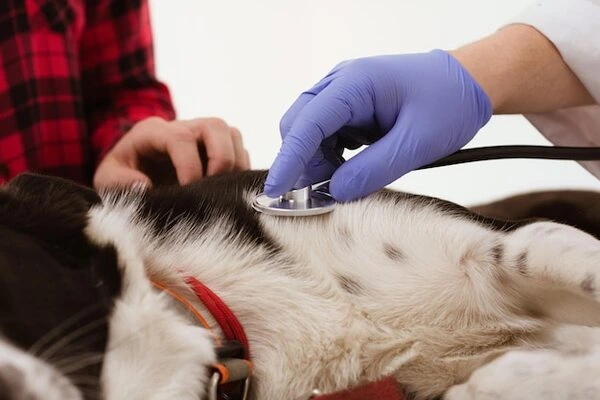
Your pet's health and happiness are our priority. As a leading emergency vet in Pune, we bring professional care to you. We understand the deep bond between humans and pets in Pune, which is why our Emergency vet is so compassionate. Your pet's comfort is our priority, and we go the extra mile to ensure a friendly and welcoming atmosphere. Our facility is equipped with safe recovery areas and monitoring systems for pets undergoing treatments. Our emergency facility is designed for quick response, ensuring your pet gets the urgent medical attention they need. Transparency in pricing and procedures makes us a preferred choice for the pet owner community in the area. Regular training ensures that our team is updated with the latest advancements in global veterinary medicine. We use the most advanced medical tools available in the industry to ensure the best outcomes for your pets in Pune. Our mission is to set a new standard for pet care in Pune. Experience the difference with our expert team. From high-quality diet tips to exercise routines, we offer a complete package for your pet's long-term health. We also provide detailed guidance on home-based care to help you maintain your pet's health between visits. Communication is key for us, so we always keep Pune pet parents informed about every step of the treatment.
Emergency Vet Pune – Your Complete Guide to Urgent and After-Hours Veterinary Care in the Oxford of the East
Emergency veterinary care in Pune presents a landscape that is meaningfully better than smaller Indian cities but genuinely different from Mumbai's comprehensive 24-hour specialist infrastructure — a reality that makes emergency preparedness more important here than in Mumbai while being less demanding than in cities like Dehradun or Lucknow that are far from any specialist emergency resource. Several Pune clinics provide extended-hours coverage and individual practitioners respond to after-hours calls for established clients; the genuine 24-hour specialist animal hospital infrastructure of Mumbai is not uniformly available throughout Pune, but the Expressway connection makes Mumbai's facilities accessible for stable critical cases within 2-3 hours. This guide covers everything Pune pet owners need to know about emergency veterinary care — recognising genuine emergencies, understanding what local resources realistically provide, the specific emergency scenarios that Pune's outdoor culture and Maharashtra's monsoon environment create, emergency costs, how to prepare effectively before any emergency arises, and when the Mumbai Expressway journey is the right response despite its time cost.
The core emergency preparedness message for Pune is straightforward: identify your local emergency option and save the contact before any emergency happens; know the Mumbai Expressway route and a Mumbai specialist hospital contact for the cases that require it; and for Pune's specific emergency risks — outdoor activity injuries, monsoon season leptospirosis, and tick-borne disease crises — know the specific recognition signs and immediate response protocols that the city's distinctive outdoor culture makes relevant here more than in most comparable Indian cities.
Recognising Genuine Veterinary Emergencies in Pune
Genuine emergencies requiring immediate veterinary attention include the universal critical scenarios: breathing difficulty; collapse; uncontrolled bleeding; suspected poisoning; GDV in large breeds; urinary obstruction in male cats; seizures longer than five minutes; severe trauma; and any rapidly deteriorating condition. In Pune's specific context, several additional scenarios deserve particular awareness given the city's outdoor culture and Maharashtra's disease environment.
Snake bite emergencies are more relevant for Pune than for most Indian cities given the frequency with which the city's outdoor-active dog population encounters snakes in the Ghats, Sinhagad area, and various semi-wild peripheries accessible from different parts of the city. Any dog with suspected snake contact — particularly if swelling, sudden weakness, difficulty breathing, or bleeding signs develop — requires immediate veterinary attention without delay for observation. The specific snake species of the Western Ghats include Russell's viper, spectacled cobra, and saw-scaled viper, all of which can cause life-threatening envenomation, and Pune's veterinary practices in areas near these natural habitats should have antivenom access or protocols for managing envenomation emergencies.
Tick-borne disease crises — the sudden profound weakness and haemorrhage of acute Babesiosis, or the thrombocytopenic bleeding of severe Ehrlichiosis — are emergency risks for Pune's outdoor-active dogs at higher frequency than in more purely urban Indian cities. The sudden onset of severe lethargy, inability to stand, pale or white gums, or spontaneous bleeding in a Pune dog with recent outdoor access should be treated as a tick-borne disease emergency requiring immediate veterinary attention. Leptospirosis acute illness following monsoon flood exposure is the second Pune-specific emergency scenario — recognising the signs (fever, lethargy, vomiting, jaundice, urinary changes) and communicating the flood-water exposure history immediately at the emergency consultation are the most important owner actions for optimal leptospirosis emergency outcomes.
Pune's Emergency Veterinary Coverage
Pune's emergency veterinary coverage is provided by extended-hours clinics that serve later evening hours, by practices that provide after-hours telephone guidance and sometimes clinic access for established clients in genuine urgent situations, and by the city's small number of practices whose extended-hours coverage most closely approximates what a 24-hour facility provides. The best coverage is concentrated in the Kothrud, Aundh-Baner, and Camp areas — Pune's veterinary quality corridor — and identifying the most capable clinic accessible within reasonable travel time from your specific Pune location is the most important single emergency preparedness action.
Call your identified emergency clinic during business hours to confirm their after-hours coverage specifics — which hours are covered, what clinical capabilities are staffed after regular hours, and whether telephone guidance from an on-call veterinarian is available for situations that may not require in-person visit. Ask your regular Pune veterinarian about their personal after-hours protocol for established clients — many quality Pune practitioners will respond to calls or text messages from long-standing clients for urgent guidance even when the clinic is formally closed. These informal personal contacts, built through the long-term relationship that regular consistent attendance creates, are among the most practically valuable emergency resources for Pune pet owners in a city where comprehensive 24-hour institutional coverage is not uniformly available.
Emergency Costs in Pune
| Emergency Service | Cost Range (₹) | Notes |
|---|---|---|
| After-hours emergency consultation | ₹400 – ₹1,500 | Emergency premium applies; confirm with clinic in advance |
| Emergency hospitalisation (per day) | ₹2,500 – ₹9,000 | Monitoring and basic medication included |
| Emergency blood panel (in-house) | ₹700 – ₹2,500 | In-house at select Pune clinics; 30–60 minute results |
| Emergency radiograph | ₹700 – ₹2,500 | Immediate at equipped facilities |
| IV fluids and supportive care | ₹2,000 – ₹6,000 | Initial stabilisation for emergency presentations |
| Snake bite emergency management | ₹5,000 – ₹30,000 | Antivenom + supportive care; cost varies with severity |
| Emergency soft tissue surgery | ₹12,000 – ₹50,000 | Wound repair, basic procedures available in Pune |
| Mumbai Expressway emergency referral | Transport + ₹25,000 – ₹2,00,000+ | For cases requiring Mumbai specialist capability |
| Tick-borne disease emergency management | ₹8,000 – ₹40,000 | Antiparasitic + supportive care; blood transfusion if severe anaemia |
Pune's Outdoor-Activity Emergency Protocols
Pune's outdoor culture creates specific emergency scenarios that require preparation beyond the standard pet emergency planning relevant in any city. For dogs that regularly trek and hike in the Ghats and surrounding areas, the following outdoor emergency protocols are important components of responsible ownership in this distinctive city.
Snake bite response: if you observe your dog interacting with a snake or suspect snake contact, remove the dog from the area immediately without attempting to capture or kill the snake (additional bites from agitated snakes are a real risk). Keep the dog as calm and still as possible — movement accelerates venom absorption. Transport immediately to the nearest equipped veterinary facility, calling ahead to describe the situation so the clinic can prepare antivenom or assess availability. Do not apply tourniquets, cut and suck the wound, or apply ice — these interventions are ineffective or harmful. The time between bite and antivenom administration is the primary determinant of outcome for Russell's viper and cobra envenomation — every minute of delay matters.
Trail injury response: paw pad lacerations, thorns and foreign bodies, and musculoskeletal trauma from uneven terrain are the most common trail injury categories for Pune's hiking dogs. For significant bleeding wounds, apply direct pressure with clean cloth and transport to veterinary care. For suspected fractures, minimise movement and transport carefully with the injured limb supported. For thorns or foreign bodies visibly embedded in paws or skin, do not attempt forcible removal that may break off the foreign body beneath the skin surface — stabilise and transport for professional removal with appropriate exploration if needed.
Pune Emergency Preparedness Framework
| Preparedness Element | Required Action | When to Complete |
|---|---|---|
| Primary Pune emergency contact | Identify best-coverage local clinic; confirm after-hours availability by calling; save number | Now — before any emergency |
| Regular vet personal contact | Ask current vet about after-hours personal protocol; save personal number if provided | At next routine appointment |
| Mumbai emergency option | Identify one Mumbai 24-hr specialist hospital; save contact; know Expressway route | Before acquiring a pet in Pune |
| Snake bite protocol | Learn removal response, transport steps, and local antivenom availability | Before first outdoor access with your dog |
| Tick-borne disease recognition | Know acute signs; confirm monthly prevention current before monsoon and trekking season | Pre-monsoon May annually; pre-trekking season |
| Leptospirosis emergency protocol | Know the signs; report flood exposure immediately; know 2–4 week monitoring window | Pre-monsoon May annually |
| Emergency financial reserve | Maintain ₹30,000 – ₹60,000 reserve or pet insurance; Mumbai transport adds cost | Before acquiring a pet |
When to Use the Mumbai Expressway for Emergency Care
The decision to transport a Pune pet to Mumbai via the Expressway for emergency care should answer one question: does the specialist care available in Mumbai genuinely change the diagnosis, treatment approach, or survival probability in a way that the time cost of the 2-3 hour journey does not offset? For rapidly deteriorating conditions that require immediate intervention — severe haemorrhage, acute respiratory failure, GDV — attempting a 2-3 hour Expressway journey in an unstable animal is counterproductive; the right response is the best available Pune stabilisation followed by assessment of whether transfer for ongoing specialist care adds value after initial stabilisation. For stable-but-specialist-requiring cases — a complex cardiac arrhythmia requiring echocardiographic specialist management, a suspected spinal lesion requiring CT imaging, a tumour requiring oncology specialist consultation — the 2-3 hour Expressway journey to Mumbai's specialist hospitals provides genuinely better outcomes than attempting management in Pune without the relevant specialist resource.
The Pune veterinarian who is honest about this calculation — who says "I can stabilise this tonight; the specific specialist care that would improve the outcome is in Mumbai; we should plan the Expressway transfer in the morning when the animal is stable and the traffic is manageable" — is providing the clinically sound, practically wise guidance that uses Pune's geography most effectively. Trust this guidance when it comes from a practitioner whose clinical judgment you have developed confidence in through the long-term relationship that routine consistent attendance builds.
Community Emergency Resources in Pune
Pune's animal welfare community provides emergency support infrastructure that supplements formal veterinary coverage. SPCA Pune operates veterinary facilities that extend to companion animal emergencies in specific circumstances. Numerous neighbourhood-level animal welfare groups and the city-wide pet rescue networks active on social media provide real-time emergency guidance, transport support assistance, and the practical wisdom of fellow Pune pet owners who have navigated the same city's emergency landscape. The Pune pet owner community on Facebook and Instagram is active, warm, and genuinely helpful in emergency situations — community members regularly assist with transport logistics, veterinary clinic guidance, and the after-hours practical support that formal institutional coverage cannot always provide.
For Pune pet owners in the outdoor community — hikers, trekkers, nature enthusiasts with dogs — the trekking and outdoor dog communities specifically maintain emergency contact networks and trail-specific guidance about veterinary access from different Ghats and trail areas that is more practically relevant than general city-wide emergency guidance. Connecting with these communities before any outdoor emergency, knowing the veterinary access options from the specific trails your dog accesses, and having the right contacts saved in the right format (offline accessible in areas without signal) is the most practically useful outdoor emergency preparation any Pune hiking dog owner can do.
Frequently Asked Questions About Emergency Veterinary Care in Pune
Is there a 24-hour emergency animal hospital in Pune? Some Pune clinics provide genuine extended-hours coverage approaching 24-hour availability, and several veterinarians respond to after-hours contacts from established clients. Comprehensive 24-hour specialist emergency hospital infrastructure comparable to Mumbai's is not uniformly available throughout Pune. For critical emergencies requiring overnight specialist monitoring, advanced surgery, or intensive care management, the Mumbai Expressway option provides access to this level of care within 2-3 hours for stable critical cases. Identifying the best local Pune coverage before any emergency, alongside the Mumbai fallback for specific situations, is the appropriate preparedness framework.
Does Pune have antivenom available for dog snake bites? Antivenom availability at Pune veterinary practices varies — some practices in areas near the Ghats and outdoor-access zones have prepared for snake bite emergencies with antivenom stocking, while others may need to source it from human hospital pharmacies in an emergency. Ask your regular Pune veterinarian specifically about antivenom availability and their snake bite management protocol — this advance knowledge is particularly important for dog owners who regularly trek with their animals in Ghats areas where snake encounters are documented.
How long does the Mumbai Expressway journey take for a pet emergency? Under normal traffic conditions on the Pune-Mumbai Expressway, the journey takes 2-3 hours from central Pune to Mumbai's western suburbs where most specialist animal hospitals are located. During peak traffic periods — weekend mornings and festive season traffic — the same journey can take 3.5-4.5 hours. For planned non-emergency specialist visits, starting early on weekdays avoids peak traffic; for urgent but stable transfers, nighttime travel on the Expressway is fastest and most predictable. Call the Mumbai facility before departure to describe the case and ensure emergency preparation at their end.
What should I carry for my dog on Ghats treks in case of emergency? A basic outdoor dog first aid kit for Pune Ghats trekking should include: sterile wound dressings and bandage material; saline irrigation solution for wound cleaning; tick removal forceps; a digital thermometer; your veterinarian's contact information and the nearest equipped Pune clinic's number; an emergency contact card with your dog's medical history, current medications, and blood type if known; and ideally a collapsible stretcher or large cloth that can be used to carry an injured dog without excessive limb movement. Keeping your regular veterinarian's number accessible offline (saved in phone contacts without signal requirement) ensures it is available in the low-signal environments of Ghats trails where emergencies most often occur.
The Outdoor-Active Pune Pet Owner's Emergency Commitment
The Pune pet owner who takes dogs into the Ghats, onto Sinhagad's rocky trails, through Mulshi's forested shores, or along any of the dozens of trekking routes that Pune's remarkable natural surroundings provide accepts a specific emergency preparedness responsibility that goes beyond what urban-only pet owners need to consider. Knowing the snake bite protocol is not excessive caution in a city where Ghats trail encounters are documented reality. Carrying a basic outdoor first aid kit is not over-preparation for an owner who regularly takes a dog into terrain where paw injuries and foreign body penetration are genuine routine risks. Saving the veterinary emergency contact in an offline-accessible phone format is not paranoia for someone who regularly treks in areas where mobile signal is unreliable.
These preparations are the practical expressions of the responsibility that comes with sharing Pune's extraordinary natural environment with a companion animal — the responsibility to be as prepared for that environment's specific risks as the environment's rewards justify and require. Pune's outdoor pet owner community, with its collective accumulated experience of the specific emergency scenarios the Ghats create, is the best resource for this preparation — more specific, more current, and more practically useful than any general guide. Connect with it, learn from it, contribute to it, and take your dog into Pune's remarkable hills with the preparation that makes every adventure as safe as it is magnificent.
Pune's pet care ecosystem — its veterinary practitioners, its emergency resources, its grooming community, and the engaged, knowledgeable pet owners who use and contribute to all of these — is building toward a standard of animal care that reflects this city's enduring commitment to quality, education, and thoughtful engagement with the world around it. Every informed choice, every honest review, every long-term relationship built on trust and consistent quality is a contribution to that standard — and to the wellbeing of every animal lucky enough to call the Oxford of the East their home.