Arowana Fish - Complete Guide
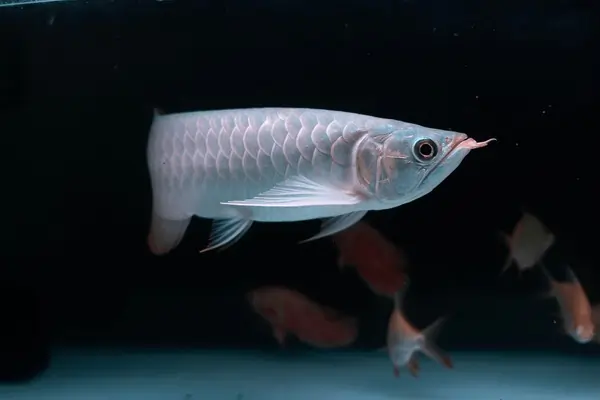
Arowana Fish is a premium aquarium species known for its large size and majestic appearance. It is often associated with good luck in many cultures. Arowanas require large tanks with strong filtration and stable water conditions. They are carnivorous and need a protein-rich diet. Due to their size and jumping behavior, a covered tank is necessary. Proper care and space management are crucial for maintaining their health and longevity.
Arowana Fish – The Complete Care Guide for Indian Aquarium Enthusiasts
The Arowana is one of the most ancient, most majestic, and most coveted freshwater fish in the world — a large, powerful, prehistoric-looking fish whose elongated, armour-scaled body, upturned mouth, and flowing fin extensions create an impression of primordial power and elegance that no other freshwater fish quite matches. Considered a symbol of good luck, prosperity, and strength in Chinese and Southeast Asian cultures, and increasingly popular among Indian fishkeeping enthusiasts who appreciate both its cultural symbolism and its genuine visual magnificence, the Arowana is the apex species of the freshwater aquarium hobby — the fish that represents the pinnacle of freshwater fish keeping achievement and that demands the highest level of setup investment, space provision, and ongoing care commitment. This comprehensive guide covers everything Indian aquarium enthusiasts need to know about Arowana — from the species available and their legal status in India, to the tank sizes genuinely required, feeding, health, and the honest assessment of what responsible Arowana keeping in India involves.
The arowana is simultaneously one of the most desirable and one of the most frequently mistreated fish in Indian aquariums — kept in tanks far too small for their adult size, fed inappropriate diets, and subjected to the water quality problems that result from inadequate filtration for large, heavily feeding predators. This guide provides the honest account of what Arowana keeping genuinely requires and what it delivers in return for meeting those requirements.
Arowana Species – Availability and Legal Status in India
Multiple Arowana species exist across South America, Asia, Africa, and Australia, and their legal status in India varies critically — a distinction that every potential Indian Arowana owner must understand before any purchase decision. The Silver Arowana (Osteoglossum bicirrhosum) from South America is the most commonly available Arowana in India and is not subject to CITES restrictions — it is a legal, commercially bred fish available through aquarium importers at prices accessible to serious freshwater enthusiasts.
The Asian Arowana (Scleropages formosus) — which includes the most sought-after Golden, Red, and Green varieties — is listed on CITES Appendix I (the highest level of international trade protection for endangered species) and cannot be legally imported into India for the aquarium trade without exceptional documentation that essentially precludes its availability through standard retail channels. Asian Arowanas available in Indian fish shops or sold online in India without CITES certification and microchipping are almost certainly illegally sourced, and purchasing them exposes the buyer to legal risk under India's Wildlife Protection Act and CITES enforcement provisions. Any Indian fishkeeper seeking Asian Arowana should verify legal documentation meticulously and be extremely cautious about offers that appear too affordable to be legally certified stock.
The Black Arowana (Osteoglossum ferreirai), also from South America, is available without CITES restriction but is somewhat rarer in Indian markets than the Silver Arowana. The Jardini Arowana (Scleropages jardini) from Australia and Papua New Guinea is occasionally available in India and occupies a more complex legal position that requires case-by-case verification of import documentation.
| Species | Origin | Legal Status in India | Price Range (₹) |
|---|---|---|---|
| Silver Arowana (O. bicirrhosum) | South America | Legal — no CITES restriction | ₹1,000 – ₹8,000 depending on size |
| Black Arowana (O. ferreirai) | South America | Legal — no CITES restriction | ₹3,000 – ₹15,000 |
| Asian Arowana — Gold | Southeast Asia | CITES Appendix I — essentially illegal without exceptional documentation | ₹50,000 – ₹5,00,000+ if certified |
| Asian Arowana — Red (Super Red) | Indonesia | CITES Appendix I — essentially illegal without exceptional documentation | ₹1,00,000 – ₹20,00,000+ if certified |
| Jardini Arowana | Australia / PNG | Requires import documentation verification | ₹5,000 – ₹25,000 |
Arowana Tank Size Requirements – The Non-Negotiable Reality
The most critical care requirement for Arowana — and the most commonly violated in Indian aquariums — is tank size. Silver Arowanas grow to 90 centimetres or more in length and are surface-oriented swimmers that need long, wide tanks providing adequate swimming length and surface area. The minimum tank size for an adult Silver Arowana is 750 litres with a length of at least 180 centimetres — a tank of aquarium-industry standard "XL" or "XXL" dimensions that most Indian households cannot accommodate. In practice, many Indian aquarists keep Arowanas in 300-400 litre tanks that are the correct size for juvenile fish but are completely inadequate for adults. An Arowana in an undersized tank shows it — curved spine from being forced to turn in insufficient length, chronic stress from confinement, and the progressive health deterioration that results from both physical constraint and psychological stress.
The honest recommendation for most Indian urban apartment dwellers is to not keep Arowanas — not because the fish is undesirable, but because the space requirement for responsible adult Arowana keeping is genuinely incompatible with most urban Indian living environments. Independent houses with dedicated fish rooms, large basement or garage spaces, or households with entire rooms devoted to a large tank can accommodate Arowanas responsibly. Apartments and most urban Indian homes cannot, and the fish suffers the consequences of the mismatch between its biological requirements and the available space.
Arowana Feeding and Nutrition
Arowanas are carnivorous predators that feed on large invertebrates, fish, amphibians, and even small mammals and birds in their natural habitat — their upturned mouth and their ability to jump from the water to take insects and small animals from overhanging branches is a well-documented natural behaviour that has made "the dragon fish" capable of leaving aquariums through unsecured openings. In captivity, appropriate foods include large live or frozen crickets, large mealworms, earthworms, large prawns, and in larger fish whole feeder fish. Commercial Arowana pellets of appropriate size are increasingly accepted by captive-bred individuals and provide nutritional completeness without the disease risk that live feeder fish introduce.
Feeding Arowanas exclusively on live feeder fish — a common Indian practice that reflects the fish's natural feeding behaviour — carries significant disease introduction risk. Feeder fish are typically poorly maintained in overcrowded shop conditions and carry a range of bacterial and parasitic infections that transfer to the Arowana with every feeding. High-quality frozen foods and quality pellets provide superior nutrition with dramatically lower disease risk and are the better choice for responsible Indian Arowana keepers. Feed adult Arowanas once daily or every other day — they are ambush predators with slow metabolisms and do not need the frequent multiple daily feedings appropriate for smaller, more metabolically active fish.
Arowana Health and Management
Arowanas are susceptible to several specific health conditions that Indian keepers must understand. Drop Eye — a condition in which one or both eyes permanently droop downward — is among the most common and most distressing Arowana health issues in captivity, associated with repeatedly watching food dropped from above the surface rather than catching it from the water's surface, causing the eye muscles to habituate to a downward-looking position. Feeding food presented at or near the surface rather than dropped from above is the primary preventive measure. Bacterial and fungal infections affecting the scales and body surface are associated with poor water quality and physical injury — maintaining excellent water quality and a tank without sharp decorations that cause scale injuries are preventive measures. Jump injuries are a serious risk — Arowanas jump, and a tank without a secure, heavy lid will eventually be found empty by its keeper.
Monthly Cost of Keeping an Arowana in India
| Expense | Monthly Cost (₹) | Notes |
|---|---|---|
| Quality Food (pellets, prawns, insects) | ₹500 – ₹2,000 | Large predator; quality food important |
| Electricity (large tank filtration + heating) | ₹800 – ₹2,500 | Large volume requires significant filtration power |
| Water Conditioner and Maintenance | ₹200 – ₹600 | Regular water changes for large messy predator |
| Tank and Equipment Maintenance | ₹200 – ₹800 | Large equipment; filter media, pump maintenance |
| Veterinary Reserve | ₹200 – ₹800 | Valuable fish; emergency treatment fund important |
| Total Estimate | ₹1,900 – ₹6,700 | Large tank electricity is the primary ongoing variable |
Frequently Asked Questions About Arowana Fish in India
Are all Arowanas illegal in India? No — Silver Arowanas (Osteoglossum bicirrhosum) and Black Arowanas (O. ferreirai) from South America are not subject to CITES restrictions and are legal to buy, sell, and keep in India. Asian Arowanas (Scleropages formosus) are CITES Appendix I listed and cannot be legally sold in India without exceptional documentation. If you are offered an Asian Arowana in India at a price that seems affordable, it is almost certainly not legally certified, and purchasing it carries significant legal risk.
Can an Arowana live in a 300-litre aquarium? A juvenile Silver Arowana of 15-25 centimetres can be housed in a 300-litre tank temporarily. As the fish grows — which happens quickly, reaching 50 centimetres within a year under good feeding — the 300-litre tank becomes increasingly inadequate. The Indian fishkeeper who buys a juvenile Arowana for a 300-litre tank and has no plan or space for the 750+ litre tank the adult will require is setting up a situation where the fish will eventually be chronically stressed, stunted, and unhealthy in an inappropriate environment.
What is the "dragon fish" cultural significance of Arowana? In Chinese and Southeast Asian cultural tradition, the Arowana's dragon-like appearance — its large scales, its elongated body, its metallic colouration in Asian varieties — associates it with the dragon, the most auspicious creature in East Asian mythology. Keeping an Arowana is believed to bring good fortune, ward off bad luck, and attract wealth, making it the most culturally significant aquarium fish in Chinese-influenced cultural traditions. This cultural meaning has driven the extraordinary prices commanded by premium Asian Arowana varieties, which are kept as status symbols as much as living animals in many high-income Chinese and Southeast Asian households.
What do Arowanas eat in Indian aquariums? Silver Arowanas in Indian aquariums are typically fed a combination of large prawns (available frozen from fish markets), large earthworms (readily available from bait shops), large crickets and mealworms, and quality Arowana pellets. Live feeder fish are commonly used but carry disease risk and should be quarantined or avoided in favour of safer alternatives. Adult Arowanas fed high-quality food and maintained in appropriate water conditions develop impressive body condition and their full characteristic metallic silver colouration.
The Arowana in Indian Aquarium Culture
The Arowana occupies a unique cultural position in Indian aquarium keeping — a fish whose combination of ancient lineage (sometimes called a "living fossil" as one of the oldest bony fish groups), striking appearance, cultural symbolism of prosperity, and sheer physical presence in a large aquarium makes it aspirational in a way that goes beyond the purely aesthetic. Indian Arowana enthusiasts who have provided appropriate setups — the large tanks, the secure lids, the quality filtration, the appropriate diet — consistently describe the experience of keeping an Arowana as among the most compelling and most personally rewarding in freshwater fishkeeping, combining the meditative quality of watching a majestic swimming predator with the genuine intellectual engagement of managing a complex, demanding large fish system.
The responsibility that comes with Arowana keeping in India is significant and should be embraced rather than minimised. The space requirement means that Arowana keeping is accessible only to households that can genuinely provide it without compromising the fish's welfare. The legal complexity around Asian Arowana varieties means that the Indian Arowana enthusiast must approach the species with honesty about legal sourcing and documentation rather than the convenient fiction that sellers of undocumented stock sometimes construct to facilitate sales. The longevity of the fish — Silver Arowanas can live 10 to 15 years — means that the commitment is genuinely long-term rather than casually reversible.
Indian Arowana keepers who approach the species with these responsibilities clearly in mind and who provide what the fish genuinely requires will find in the Arowana one of the most magnificent and most engaging large freshwater fish experiences available anywhere in the world — a living connection to the ancient river systems of South America, kept with the care and respect that its extraordinary heritage and remarkable presence deserves.
Arowana Tank Design for Indian Homes – Practical Considerations
Designing and installing a tank appropriate for adult Arowana keeping in an Indian home requires structural as well as aesthetic planning. A 750-litre aquarium, when filled with water, glass, substrate, and equipment, weighs approximately 900 kilograms — a load that many Indian floors, particularly in multi-storey apartment buildings, cannot safely support without structural assessment. Any Indian fishkeeper planning a large Arowana tank in an apartment setting should consult a structural engineer or building management before installation. Independent houses typically have ground floors capable of supporting large aquarium weights, but upper-floor installations in both houses and apartments warrant verification.
The practical logistics of Arowana tank maintenance in an Indian home are also worth consideration. Water changes of 20-30% weekly for a 750-litre tank involve moving 150-225 litres of water — requiring either a Python-style water change system connected to a tap and drain, or dedicated water storage and pumping equipment. The feed requirements of a large Silver Arowana — large insects, prawns, or prepared fish food daily — require reliable sourcing that should be identified before the fish is acquired rather than improvised after. These practical considerations are not arguments against Arowana keeping but components of the genuine planning that responsible Arowana ownership requires from the outset.
The Indian aquarium hobby continues to grow in sophistication, and the fish described in this guide represent its most demanding and most rewarding expressions. Every keeper who meets these fish's genuine requirements rather than compromising them for convenience contributes to the culture of excellent aquarium keeping that benefits every fish in every home aquarium in India. These fish deserve that standard, and the keepers who provide it will find it entirely, magnificently worth every dimension of the effort involved.
This is the standard worth pursuing — not the minimum standard that produces fish that merely survive, but the excellent standard that produces fish that truly thrive, displaying their full natural colour, expressing their complete behavioural repertoire, and living the long, healthy lives that appropriate care makes possible. Set this standard for yourself and your fish, and discover why the Indian aquarium hobby at its best is one of the most deeply satisfying hobbies available to any animal-loving person in this country.
Every year of consistent, excellent care — quality food, clean water, appropriate space, attentive observation, and the genuine engagement with a remarkable living creature that the best fishkeeping represents — is a year in which both the fish and its keeper are living well. That is the ultimate measure of success in the aquarium hobby, and it is the standard that every Indian fishkeeper who has read this guide is now equipped to achieve.
The aquarium that contains a healthy, well-cared-for specimen of any of these extraordinary fish is an aquarium whose keeper has earned the right to call themselves a serious fishkeeper — one whose commitment to excellence in animal care reflects the best values of the Indian hobby community and whose example inspires other keepers toward the same high standards that the fish themselves demand and deserve.
The Silver Arowana in a 750-litre aquarium, gliding at the surface with the unhurried confidence of a fish that has no natural predators in its adult form, is one of the most commanding presences in freshwater fishkeeping. Earn that presence through proper preparation and genuine commitment, and you will understand why this ancient fish commands the devotion of every keeper who has provided it what it truly needs.