Doberman - Complete Guide
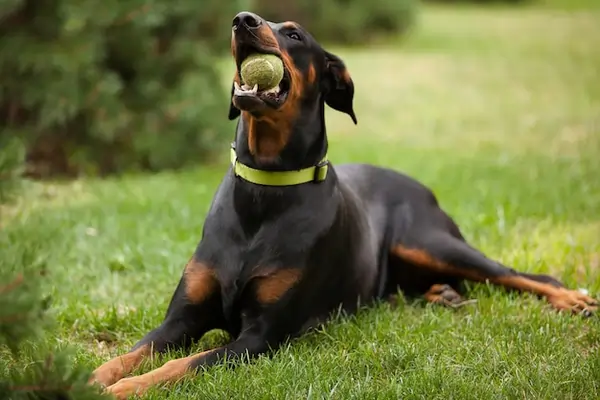
The Doberman Pinscher is a highly intelligent and alert dog breed known for its strong guarding instincts. It was originally developed for protection, which makes it naturally loyal and responsive to training. In India, Dobermans are often chosen for security purposes as well as companionship. They require regular exercise, structured training, and early socialization to develop balanced behavior. A protein-rich diet and routine health care are essential for maintaining their muscular build and overall fitness. This breed thrives in active households where it gets both physical activity and mental stimulation.
Doberman Pinscher – The Complete Guide for Indian Dog Lovers
The doberman Pinscher is one of the most striking, most intelligent, and most misunderstood dog breeds in India. Sleek, powerful, and possessed of an alert presence that commands attention wherever they go, Dobermans have long been associated with guarding and protection — a reputation that captures only one dimension of a breed that is also deeply loyal, remarkably sensitive, and capable of extraordinary affection toward the family they consider their own. In India, Dobermans have a dedicated following among experienced dog owners, security-conscious families, and enthusiasts who appreciate working breeds of genuine intelligence and athleticism. This comprehensive guide covers everything you need to know about owning a Doberman in India — from their history and characteristics, to current prices across Indian cities, health considerations including India-specific disease risks, training requirements, monthly care costs, and how to find a reputable breeder.
The Doberman is emphatically not a dog for everyone. They require an experienced, confident owner who provides consistent structure, substantial daily exercise, and genuine engagement of their powerful intellect. In the right hands, a Doberman is breathtaking in every sense — a dog of extraordinary capability, unshakeable loyalty, and magnetic personality. In the wrong hands, an under-stimulated or poorly trained Doberman is a serious management challenge. This guide helps you determine which category describes your situation before you make a decision that affects both your life and the dog's.
History and Origin of the Doberman Pinscher
The Doberman Pinscher was developed in Germany in the late 19th century by Louis Dobermann, a tax collector who wanted a dog capable of accompanying and protecting him during his rounds — a dog that was intimidating enough to deter threats, loyal enough to be trusted, and athletic enough to cover the distances his work required. Louis Dobermann, who also managed the local dog pound, had access to a range of breeds from which he selectively bred his ideal companion. The exact breeds used in the development of the Doberman are not definitively documented, but German Shepherd, rottweiler, Weimaraner, Greyhound, and Manchester Terrier contributions are commonly proposed based on the Doberman's physical and temperamental characteristics.
The breed was standardised after Dobermann's death in 1894 by a group of enthusiasts who named it in his honour. The Doberman Pinscher Club of Germany was founded in 1899, and the breed quickly gained recognition for its exceptional working qualities. Dobermans served extensively in both World Wars as messenger dogs, guard dogs, and search-and-rescue animals, and their demonstrated performance in these demanding roles cemented their reputation as one of the premier working breeds in the world.
In India, Dobermans have been used by police forces, private security organisations, and military units for decades. The breed's combination of speed, intelligence, trainability, and natural protective instinct makes it exceptionally well-suited to security and working roles. As a companion dog, the Doberman has found a devoted following among India's experienced dog owners who appreciate a breed that offers genuine partnership — a dog that works with its owner rather than simply obeying commands.
Doberman Price in India – Current Market Rates
The price of a Doberman puppy in India varies considerably depending on pedigree, KCI registration, colour, and breeder quality. The classic black-and-rust Doberman is the most common, while the blue (steel grey) and fawn (Isabella) colour varieties are rarer and typically command a premium. Red-and-rust Dobermans fall between the two in price and availability. Working line Dobermans from known protection sport bloodlines command the highest prices, reflecting the selective breeding investment their lines represent.
| Category | Price Range (₹) | Details | Best For |
|---|---|---|---|
| pet quality, no papers | ₹15,000 – ₹25,000 | Healthy puppy, local breeder, no documentation | Companion only |
| KCI registered, pet quality | ₹25,000 – ₹45,000 | Verified pedigree, vaccination records | Family companion with documented lineage |
| Show quality, KCI registered | ₹45,000 – ₹90,000 | Championship bloodlines, excellent conformation | Show enthusiasts and serious breeders |
| Working line / IPO bloodline | ₹60,000 – ₹1,50,000 | Proven working genetics, high drive | Protection sport, professional training |
| Blue or Fawn colour premium | ₹40,000 – ₹80,000 | Rare colour genetics | Colour enthusiasts; same care requirements |
Doberman Temperament – Understanding the Real Personality
The Doberman's public image — fierce, aggressive, unpredictably dangerous — is a caricature that bears little resemblance to the actual temperament of a well-bred, well-raised Doberman. These dogs are intensely loyal to their family, remarkably sensitive to human emotion, genuinely affectionate with those they love, and possessed of an intelligence that places them among the top five or ten most trainable dog breeds in the world. The Doberman is a thinking dog — it does not simply execute commands but interprets situations, anticipates needs, and makes judgements that reflect genuine cognitive engagement with its environment.
With family, Dobermans are typically gentle, playful, and deeply attached — often described as "velcro dogs" for their tendency to stay close to their chosen person. They are generally good with children who are old enough to interact respectfully, though their size and energy require supervision with very young children. With strangers, they are typically reserved rather than friendly — a natural wariness that reflects appropriate protective instinct rather than aggression. With proper socialisation from puppyhood, a Doberman learns to distinguish between genuine threats and normal social situations, responding appropriately to each.
The Doberman's sensitivity is perhaps its most underappreciated characteristic. These dogs are acutely aware of their owner's mood and respond to emotional states with a perceptiveness that can be both moving and challenging. A Doberman whose owner is anxious or uncertain will reflect that anxiety in their own behaviour. An owner who projects calm confidence provides the emotional security that allows a Doberman's best temperament to emerge. This sensitivity to the owner's state is a central reason why consistent, confident handling is so important with this breed.
Doberman Health – Important Considerations for Indian Owners
Dobermans are a breed with several well-documented genetic health vulnerabilities that every prospective owner should understand before purchase. Dilated Cardiomyopathy (DCM) — a progressive disease in which the heart muscle weakens and the heart chambers enlarge — is the most serious and most prevalent health concern in the breed worldwide. Studies suggest that up to 50% of Dobermans carry genetic variants associated with DCM, and the condition accounts for a significant proportion of premature deaths in the breed. Annual echocardiographic screening from three years of age is recommended for all Dobermans, and the results should inform any breeding decisions.
Von Willebrand's Disease (vWD), a hereditary bleeding disorder affecting blood clotting, is the second major genetic health concern. Affected dogs may show prolonged bleeding from minor wounds, nosebleeds, or surgical complications. A DNA test is available for vWD, and responsible breeders screen their breeding stock. Cervical Vertebral Instability (CVI or Wobbler Syndrome) — a neurological condition affecting the cervical spine and causing progressive hind-limb incoordination — is also documented in Dobermans. Hip and elbow dysplasia, while less prevalent than in some larger breeds, should be assessed in breeding stock. In India, the same tick-borne disease burden that affects all dogs requires year-round preventive treatment for Dobermans as for any breed.
| Health Condition | Prevalence | Screening Available | Management |
|---|---|---|---|
| Dilated Cardiomyopathy (DCM) | Very high — up to 50% of breed | Annual echocardiogram from age 3 | Medication; regular monitoring |
| Von Willebrand's Disease | Moderate | DNA test available | Avoid elective surgery without evaluation |
| Wobbler Syndrome (CVI) | Moderate | MRI and CT for diagnosis | Surgery or management depending on severity |
| Hypothyroidism | Moderate | Annual thyroid panel | Daily oral medication; very manageable |
| Tick-borne diseases | High in India | Annual serology recommended | Year-round tick prevention; prompt treatment |
Doberman Exercise and Training Requirements
The Doberman is a high-energy, high-drive breed that requires substantial daily exercise and consistent mental stimulation to maintain the physical and psychological health that produces good behaviour. Adults require a minimum of 90 minutes of vigorous exercise daily — not slow walks, but genuine aerobic activity including running, fetch, or working activities that engage their athleticism. Puppies need shorter, more frequent exercise sessions to protect developing joints; the five-minutes-per-month-of-age guideline applies to structured exercise, while free play in a secure area can be more liberal.
Mental stimulation is as important as physical exercise for the Doberman. A physically tired Doberman that is mentally understimulated will still find destructive outlets for its intelligence. Obedience training, protection sport (Schutzhund/IPO), agility, scent work, and interactive puzzle feeders all engage the Doberman's intelligence productively. Training should begin from the first day at home and continue consistently throughout the dog's life — not as a series of sessions that end when basic obedience is achieved, but as an ongoing relationship of engagement, challenge, and reward that gives the Doberman's intelligence a constructive outlet.
Professional training from a knowledgeable, force-free trainer is strongly recommended for Doberman owners, particularly those new to the breed. The Doberman's intelligence means it learns quickly — including learning to exploit inconsistencies in handling. Early professional guidance that establishes clear, consistent communication prevents the development of behavioural challenges that become much harder to address once established in an adult dog of this size and strength.
Monthly Cost of Owning a Doberman in India
Dobermans are large, active dogs with significant ongoing care costs. The following breakdown reflects realistic monthly expenses for Doberman ownership in India's major cities, covering all essential care dimensions. Potential owners should honestly assess whether their budget can sustainably accommodate these costs before acquiring this breed.
| Expense | Monthly Cost (₹) | Notes |
|---|---|---|
| Premium Dog Food | ₹4,000 – ₹8,000 | Large active breed needs quality high-protein food |
| Veterinary Care | ₹800 – ₹2,500 | Includes annual cardiac screening amortised monthly |
| Tick and Flea Prevention | ₹400 – ₹1,200 | Monthly oral or spot-on treatment; non-negotiable |
| Training Classes | ₹2,000 – ₹5,000 | Ongoing; essential for this breed's management |
| Grooming (minimal) | ₹300 – ₹600 | Short coat; nail trimming and basic grooming |
| Toys and Enrichment | ₹500 – ₹1,500 | Durable toys; puzzle feeders; fetch equipment |
| Total Estimate | ₹8,000 – ₹18,800 | Higher in first year; cardiac screening adds cost from year 3 |
Frequently Asked Questions About Dobermans in India
Are Dobermans good family dogs? With proper socialisation and training, yes — Dobermans are deeply loyal family dogs who are gentle and affectionate with their own people. They are typically better suited to families with older children given their size and energy. The key is early socialisation, consistent training, and an owner who understands and meets the breed's significant exercise and stimulation needs.
Do Dobermans require ear cropping in India? Ear cropping is a cosmetic procedure traditionally performed on Dobermans in some countries. In India, this procedure has no legal requirement and its practice has declined as animal welfare awareness has grown. Natural-eared Dobermans are perfectly healthy and an increasing number of reputable Indian breeders produce uncropped dogs. The natural ear fold does not affect health or temperament in any way.
How do Dobermans handle India's heat? Dobermans' short, single-layer coat makes them more heat-tolerant than heavily coated breeds. However, their high energy and dark colouration mean they should not be exercised during peak afternoon heat in India's summer months. Exercise should be limited to early morning and evening hours from April through June, and access to shade and fresh water must always be available.
What is the lifespan of a Doberman? The average lifespan of a Doberman is 10 to 13 years, though the breed's predisposition to DCM means that many individuals do not reach their genetic lifespan potential without proactive cardiac monitoring and management. Dogs from health-tested bloodlines with annual cardiac screening consistently outlive those without this monitoring.
Doberman Socialisation – The Most Important Investment You Can Make
Of all the investments a Doberman owner makes — in food quality, in training classes, in veterinary care — socialisation during the critical window of puppyhood delivers the highest return on the Doberman's long-term temperament and quality of life. The socialisation window for dogs closes at approximately 14 to 16 weeks of age, after which new experiences become increasingly challenging for the developing nervous system to process as neutral rather than threatening. What a Doberman puppy experiences as normal and unremarkable during this critical window — different people of different ages and appearances, other dogs, different environments, sounds, vehicles, children, and handling — it will regard as part of the normal fabric of the world for the rest of its life. What it does not encounter during this period may be experienced as novel and potentially threatening in adulthood, requiring much more effort to desensitise than would have been needed with simple early exposure.
The practical implication for Doberman owners is to pursue socialisation with deliberate, systematic effort from the moment the puppy arrives home at eight weeks, balancing the need for broad exposure against the infection risk that exists before the vaccination series is complete. Puppy classes that require vaccination proof for participants provide a safe socialisation environment. Visiting the homes of friends with known healthy dogs, carrying the puppy in public places where it can observe without ground contact, and introducing it to a wide range of people within your home and social circle are all safe early socialisation strategies. The effort invested in these first sixteen weeks returns dividends across the entire decade-plus lifespan of a Doberman who is secure, stable, and appropriate in its responses to the world.
A Doberman that has been thoroughly socialised but inadequately trained is manageable; a Doberman that has been well-trained but under-socialised is potentially dangerous. Socialisation and training together produce the ideal outcome — a dog that is psychologically secure, responsive to its owner, and an asset to every social situation it enters. Prioritise both, starting from the first day the puppy comes home, and you will have one of the most remarkable companion dogs the canine world has to offer.
The Doberman rewards exceptional owners with exceptional partnership. Invest in quality breeding, thorough socialisation, consistent training, and proactive health monitoring — and you will have a companion of breathtaking capability and unwavering loyalty.
Doberman Feeding Guide for India
Adult Dobermans require a quality large-breed dry kibble providing adequate protein for their muscular frame, typically 25-28% protein minimum. Given the breed's DCM predisposition, there is ongoing research interest in the relationship between grain-free diets and cardiac health in certain breeds — most cardiologists currently recommend avoiding exclusively grain-free formulations for Dobermans until the research picture clarifies further. Two measured meals daily are preferable to free-feeding or once-daily feeding, which can increase bloat risk in deep-chested breeds. Fresh water must always be available, especially important in India's heat where Dobermans need adequate hydration to support their active lifestyle and thermoregulation.
Owning a Doberman in India is a commitment that rewards every effort you invest — in health monitoring, in quality nutrition, in consistent training, and in the genuine relationship that develops between an engaged owner and a well-cared-for companion dog over years of shared life. The breed deserves your best, and when it receives it, what it returns exceeds every expectation.
Every year that you invest in your dog's preventive health care, consistent training, and genuine social engagement returns compounding benefits in the form of a healthier, more balanced, more rewarding companion. The dogs that receive this investment are the dogs that live longest, happiest, and most fully — and the owners who provide it are the ones who look back on the relationship with the deepest satisfaction and the fewest regrets.