Hedgehog - Complete Guide
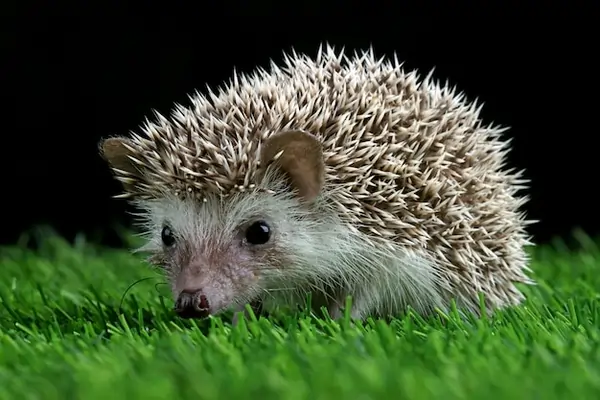
hedgehog is a unique small pet known for its spiky appearance and nocturnal behavior. It requires a warm and quiet environment to stay comfortable. Hedgehogs need a secure enclosure with hiding spaces and exercise wheels. Their diet includes specially formulated food along with insects. Regular cleaning and minimal disturbance during daytime help maintain their health. With proper care, hedgehogs become manageable and interesting pets.
Hedgehog – The Complete Care Guide for Indian Exotic Pet Owners
The African Pygmy Hedgehog (Atelerix albiventris) is one of the most distinctive and most individually characterful exotic small pets available to Indian households — a small, spiny insectivore whose unique appearance, fascinating natural behaviour, and surprisingly individual personalities have won a devoted following among India's growing exotic pet enthusiast community. The hedgehog's defence mechanism — rolling into a tight ball and presenting its coat of sharp spines to any perceived threat — makes initial handling uniquely tactile among pet animals, and the gradual process of taming a hedgehog from defensive ball to relaxed, curious explorer in the palm of its owner's hand is one of the most genuinely rewarding taming experiences available in the small pet hobby. This comprehensive guide covers everything Indian pet owners need to know about hedgehog care — including the legal considerations that apply to hedgehog ownership in India, temperature requirements, diet, health management, and the taming process that transforms this naturally defensive animal into a surprisingly sociable companion.
Hedgehogs are honest pets — they do not pretend to be tameable or social until they have been persuaded through patient, consistent positive interaction that a specific human is safe. This process takes weeks of daily effort and produces genuine rewards in the relaxed, curious behaviour of a hedgehog that has decided its owner can be trusted. The hedgehog that has made this decision is a genuinely engaging companion; the one that has not is simply a defensive ball that offers little beyond its novelty value.
Hedgehog Legal Status in India
The legal status of hedgehog ownership in India is an important first consideration for any Indian person interested in keeping them as pets. African Pygmy Hedgehogs are not native to India and are not protected under India's Wildlife Protection Act as a listed species — however, their import and sale may be subject to regulations under CITES (Convention on International Trade in Endangered Species) and the Foreign Trade (Development and Regulation) Act. Before acquiring a hedgehog in India, verify with a legal specialist or with the regional Wildlife Crime Control Bureau office whether hedgehog acquisition, ownership, and breeding is currently permitted in your specific state. Regulations regarding exotic pet ownership in India vary between states and are subject to change. Purchasing hedgehogs from legal, documented sources and maintaining import documentation is essential for Indian hedgehog owners.
The hedgehog community in India is small but active, and connecting with established Indian hedgehog enthusiasts through online communities is the most reliable way to access current, accurate information about the legal status of hedgehog ownership in your specific Indian state and city — legal situations that general guides cannot always reflect in real-time accuracy.
Hedgehog Natural History
The African Pygmy Hedgehog is native to the savannahs and dry grasslands of central and eastern Africa — a warm, dry environment that is significantly more compatible with India's climate than the cold-climate origins of chinchillas. This warm-climate origin means that hedgehogs tolerate India's warm conditions significantly better than cold-adapted species, provided that temperatures remain within their preferred range. Hedgehogs thrive at 23-27 degrees Celsius — cooler than some Indian summers but warmer than the cold tolerance limit of most cold-climate pets. In North India's winters, heating rather than cooling may be required to maintain appropriate hedgehog temperatures.
Wild African Pygmy Hedgehogs are solitary, nocturnal insectivores — spending their days sleeping in leaf litter or burrows and emerging at dusk to forage through up to 3 kilometres of territory nightly in search of insects, worms, and other invertebrates. This nocturnal activity pattern is maintained in captive individuals, meaning that hedgehog owners who want to interact with their pets will have their best opportunities during late evening and early night hours. Attempting to interact with a hedgehog during its day-sleep typically produces the defensive ball response rather than engaged exploration — working with the animal's natural schedule produces dramatically better taming outcomes.
Hedgehog Housing Requirements
Hedgehogs require more space than is often assumed for animals of their compact 200-500 gram size — they cover substantial distances nightly in their natural foraging behaviour, and captive hedgehogs without adequate space and exercise opportunities develop obesity and the associated health problems that shortened lifespans in inadequately housed individuals. The minimum enclosure size for a single hedgehog is 90 cm x 60 cm floor space, with solid smooth flooring (not wire mesh, which causes leg injuries and foot problems). A wheel is essential — a solid-surface wheel of at least 28 cm diameter allows the hedgehog to express its natural high-mileage nightly running behaviour. Hedgehog wheels are unfortunately widely available in sizes too small for adult hedgehog use; measure carefully and confirm 28 cm minimum diameter before purchasing any wheel for a hedgehog enclosure.
Temperature maintenance in the hedgehog enclosure requires a reliable heating system — a ceramic heat emitter or thermostat-controlled heating pad (not a reptile heat rock, which causes burns) maintains appropriate temperatures without the light-disturbance that conventional heating bulbs create in a nocturnal animal's enclosure. Target temperature of 24-27 degrees Celsius; hedgehogs that experience sustained temperatures below 18 degrees Celsius may attempt to hibernate — a dangerous response in captive African Pygmy Hedgehogs (which are not true hibernators adapted to safely hibernate) that can result in hypothermia and death if the temperature is not corrected promptly. Any hedgehog found unresponsive or extremely lethargic in a cool environment should be gently warmed in the hands or against the body while the enclosure temperature is raised.
Hedgehog Diet in India
Hedgehogs are insectivores in nature — their diet of insects, worms, and occasional plant material requires a protein-rich, low-fat diet in captivity that differs significantly from the seed and grain diets appropriate for rodent small pets. Commercial hedgehog food is available in India through specialist exotic pet suppliers, but quality varies and many products on the Indian market are insufficient as sole dietary sources. Cat food — specifically high-quality dry cat food with chicken or turkey as the primary ingredient, low in fat and free of fish-based ingredients — is a widely used and generally acceptable hedgehog dietary base that provides appropriate protein levels. Supplement cat food with regular live or dried insects — mealworms, crickets, waxworms — that provide the protein and chitin that hedgehog digestive systems are specifically adapted to process and that significantly enrich both the diet and the feeding experience.
Fresh fruits and vegetables can be offered in very small quantities as supplemental treats — hedgehogs particularly accept apple, melon, banana, carrot, and cooked sweet potato. Avoid grapes, raisins, grapes, onions, garlic, and avocado (toxic to hedgehogs). Mealworms should be a regular feature of the hedgehog diet in India — they are widely available from bait shops and online pet suppliers, and hedgehogs find them irresistible, making them an excellent tool for taming as well as a valuable nutritional supplement.
Hedgehog Taming – The Patient Process
Taming a hedgehog from its initial defensive ball response to relaxed, curious handling is one of the most distinctively rewarding experiences in small pet ownership and one that requires specific technique and consistent patience to achieve successfully. The taming process begins by understanding the hedgehog's perspective — it is a prey animal from an environment where any large moving object overhead could be a predator, and its spiny ball defence is the appropriate response to perceived threat. Convincing a hedgehog that you are not a predator requires gradual familiarisation through consistent, positive exposure to your presence, your scent, your voice, and eventually your touch — none of which can be rushed.
The practical taming sequence involves initially wrapping the hedgehog in a small soft fleece cloth that provides a gripping surface for the hedgehog's feet when it uncurls, supporting its weight on the cloth rather than bare hands (spines are manageable on fabric but uncomfortable on bare skin until the hedgehog fully relaxes). Speak softly and consistently during handling sessions to familiarise the hedgehog with your voice. Offer mealworms from the palm to create positive food associations with your hand. Work during the hedgehog's natural active period — evening and night hours — when it is naturally alert and less likely to remain defensively balled. A hedgehog that has been consistently, patiently handled for several weeks typically progresses from immediate balling to cautious exploration in the keeper's hands, and from cautious exploration to confident, curious engagement that makes handling a genuine pleasure.
Hedgehog Health Management
| Health Condition | Signs | Indian Risk Level | Management |
|---|---|---|---|
| Wobbly Hedgehog Syndrome (WHS) | Progressive muscle weakness; difficulty walking | Hereditary — no India-specific factor | No cure; supportive management; exotic vet required |
| Obesity / Fatty Liver | Overweight; fat rolls visible when balled | Moderate — common in inadequately exercised hedgehogs | Wheel exercise; portion-controlled diet; weight monitoring |
| Cancer (various) | Lumps; weight loss; lethargy; mouth sores | High — common in older hedgehogs | Regular palpation checks; exotic vet assessment of any mass |
| Hibernation Attempt (torpor) | Extreme lethargy; cool body temperature; unresponsive | Moderate in North India winter | Maintain 24-27°C; warm gently if found in torpor; veterinary care |
| External Parasites (mites) | Excessive quill loss; scratching; skin flaking | Moderate | Exotic vet-prescribed parasite treatment |
Monthly Cost of Keeping a Hedgehog in India
| Expense | Monthly Cost (₹) | Notes |
|---|---|---|
| Quality Dry Cat Food (base diet) | ₹300 – ₹700 | Low fat, chicken-based; measured portions |
| Live / Dried Mealworms and Insects | ₹150 – ₹400 | Essential protein supplement; taming tool |
| Heating Equipment (ceramic emitter) | ₹200 – ₹600 | More critical in North India winter; ongoing electricity cost |
| Bedding Substrate | ₹200 – ₹500 | Paper-based or fleece liners; regular changes |
| Veterinary Reserve (exotic specialist) | ₹400 – ₹1,200 | Exotic vet required; cancer surveillance from middle age |
| Total Estimate | ₹1,250 – ₹3,400 | Moderate cost; veterinary care is the significant variable |
Frequently Asked Questions About Hedgehogs in India
Are hedgehog spines painful to handle? A hedgehog in defensive ball posture with raised spines is uncomfortable to pick up on bare skin — the spines are not barbed or venomous but are sharp and firm. A relaxed, uncurled hedgehog with flat-lying spines is entirely comfortable to handle with bare hands — the spines lie flat and feel more like firm bristles than sharp points. The difference between these two experiences — the defensive ball and the relaxed explorer — is the product of successful taming and is the motivation for the patient taming process described in this guide.
Do hedgehogs carry disease risks for humans? Hedgehogs can carry Salmonella bacteria without showing illness, creating a transmission risk for people who handle them and then touch their faces before washing hands. Standard hygiene practices — washing hands thoroughly with soap and water after handling hedgehogs and before eating — effectively manage this risk. Hedgehogs have also been implicated in occasional ringworm transmission. Immunocompromised individuals should be aware of these risks and may wish to consult with a physician before acquiring a hedgehog.
How long do hedgehogs live? African Pygmy Hedgehogs in appropriate conditions typically live 4 to 6 years, with some individuals reaching 8 years. Their relatively short lifespan compared to chinchillas, rabbits, and rats means that Indian hedgehog owners should approach the relationship with the appreciation that the years available are limited — providing the best possible care within those years produces both the best quality of life for the hedgehog and the most rewarding experience for its owner.
Can I keep two hedgehogs together? Generally no — African Pygmy Hedgehogs are solitary in nature and most adults fight when housed together. Unlike guinea pigs and rats, hedgehogs do not benefit from constant conspecific companionship and can live happily as single animals with regular human interaction supplementing their social needs. Breeding pairs should only be housed together under supervised breeding conditions, not as a permanent cohabitation arrangement.
Understanding Hedgehog Behaviour in Indian Homes
The hedgehog's behavioural repertoire is fascinating once understood — a range of activities and responses that reflect the biology of a solitary nocturnal insectivore from African savannahs that has been placed in an Indian urban domestic context. Understanding these behaviours helps Indian hedgehog owners interpret what they observe, respond appropriately, and appreciate the natural context of their pet's actions rather than anthropomorphising them in ways that produce misunderstanding.
Anointing — a behaviour in which a hedgehog encounters a new or particularly interesting scent, produces copious foamy saliva, and then applies this saliva to its spines using a complex contorting movement — is one of the most commonly observed and most puzzling hedgehog behaviours for new Indian owners. The purpose of anointing is not fully understood by researchers, but is thought to function as a form of camouflage (masking the hedgehog's own scent with the novel scent) or possibly as a way of transferring potentially toxic compounds to the spines as a defence mechanism. This is entirely normal and harmless behaviour — when your hedgehog begins salivating profusely and applying the foam to its own spines, it is simply being a hedgehog, and no intervention is needed.
The wheel is the most important enrichment accessory for the captive hedgehog — these animals run extraordinary distances nightly in the wild, and the wheel provides the outlet for this locomotor drive that their limited enclosure cannot otherwise offer. A hedgehog that has an appropriate wheel available will typically run several kilometres every night — running that is essential for metabolic health, weight management, and the psychological satisfaction of expressing a fundamental natural behaviour. Many Indian hedgehog owners are initially surprised by how much their hedgehog uses the wheel; it is not unusual for the wheel to show many kilometres of use in a single night when the hedgehog is most active.
The Indian hedgehog owner community, accessible through dedicated Facebook groups and Instagram accounts, provides the accumulated India-specific experience of keeping this unusual exotic in Indian conditions — including guidance about managing the temperature requirements, sourcing the appropriate foods, finding exotic animal veterinarians with hedgehog experience, and the countless daily observations that make hedgehog keeping increasingly rewarding as the owner's understanding of this unique animal deepens.
The Hedgehog as India's Most Distinctive Exotic Pet
Among India's growing exotic pet community, the hedgehog occupies a uniquely distinctive niche — an animal so different in its sensory experience, its behavioural ecology, and its requirements from the mainstream small pets that keeping one successfully requires a genuine learning investment that most first-time hedgehog owners find far more interesting and engaging than they expected. The process of earning a hedgehog's trust — of watching the defensive ball gradually open, the tiny nose appear and begin twitching, the bright eyes assess you, and the small feet step cautiously onto your palm — is a form of relationship building that is entirely absent from the keeping of more immediately friendly species, and whose achievement creates a quality of satisfaction that many hedgehog owners describe as genuinely unlike anything they have experienced with other pets.
Every informed, committed Indian pet owner who provides what their animal genuinely needs — rather than what is convenient, cheapest, or most commonly done — is contributing to the culture of excellent animal care that benefits every pet in every household that community knowledge and shared standards eventually reach. This guide has aimed to provide the knowledge foundation for that excellence. The rest is the daily, consistent, caring practice that makes the difference between animals that survive in our care and animals that genuinely thrive in it.