Guinea Pig - Complete Guide
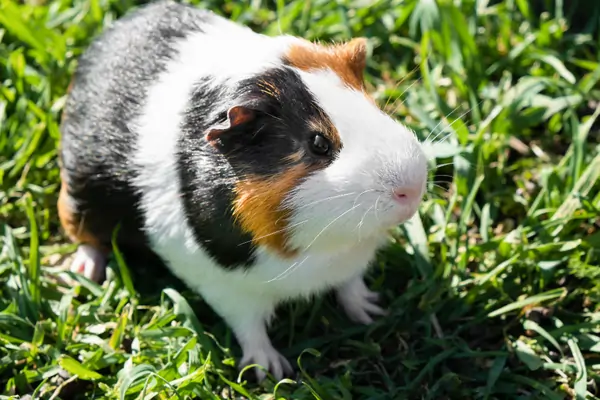
guinea pig is a friendly and social small pet known for its vocal nature. It prefers to live in groups and requires a spacious cage with proper bedding. Guinea pigs need a diet rich in hay, fresh vegetables, and vitamin C supplements. Regular cleaning and monitoring help maintain their health. They are easy to handle and suitable for families. Providing a stress-free environment improves their lifespan.
Guinea Pig – The Complete Pet Care Guide for Indian Households
The Guinea Pig (Cavia porcellus) — also known as the Cavy — is one of the world's most popular small pet animals and one that is genuinely underappreciated in India, where its considerable merits as a companion animal have not yet reached the level of mainstream awareness that dogs, cats, and hamsters enjoy. Guinea Pigs are social, vocal, gentle, and robust small herbivores whose range of vocalisations — from the contented "purring" rumble of a happy guinea pig being petted to the excited "wheek!" that greets the opening of the vegetable drawer to the complex social chattering of a bonded pair — makes them uniquely communicative among small pets. Their gentle temperament, their tolerance for handling when socialised appropriately, their genuinely social nature that makes pair-keeping both rewarding and necessary for their welfare, and their reasonable care requirements make them excellent companion animals for Indian households seeking a small pet that offers genuine interaction without the demands of dog or cat ownership. This comprehensive guide covers everything Indian pet owners need to know about guinea pigs — from their requirements for correct housing, the critical vitamin C requirement that most Indian owners don't know about, social needs, health management, and the genuine pleasures of keeping these characterful small animals well.
Guinea Pigs are honest pets in the most practical sense — they communicate their wellbeing clearly through their vocalisations and body language, and a guinea pig that is comfortable, well-fed, and socially stimulated behaves in ways that make its contentment visible and audible. Learning to understand and respond to guinea pig communication is one of the most engaging aspects of guinea pig ownership and produces the interactive relationship that many Indian guinea pig owners find unexpectedly rewarding.
Guinea Pig Breeds and Varieties in India
Guinea Pig breeds differ primarily in coat type and length, with coat variety affecting grooming requirements significantly. The Smooth-coated American Guinea Pig is the most common and most manageable — short, glossy coat requiring minimal grooming and available in a wide range of single colours and pattern combinations. The Peruvian and Silkie Guinea Pigs have long, flowing coats that require daily combing to prevent matting and should only be chosen by owners committed to regular grooming. The Abyssinian Guinea Pig has a distinctive "rosette" coat pattern — multiple whorls of hair radiating from central points — that gives it a perpetually tousled, endearing appearance and requires moderate grooming attention. The Rex Guinea Pig has a short, dense, velvety coat and the Teddy has a longer dense plush coat — both moderate grooming needs. The Hairless or Skinny Pig (with minimal hair covering) is an increasingly popular variety that requires specific temperature management as its lack of coat makes it susceptible to cold.
| Breed | Coat Type | Grooming Need | Price Range (₹) |
|---|---|---|---|
| American (Smooth) | Short, smooth | Weekly brushing | ₹300 – ₹1,000 |
| Abyssinian | Rosette pattern | Twice-weekly brushing | ₹500 – ₹2,000 |
| Peruvian | Very long, flowing | Daily grooming — high commitment | ₹1,000 – ₹4,000 |
| Rex | Short, dense, velvety | Weekly brushing | ₹500 – ₹2,000 |
| Teddy | Dense plush coat | Regular brushing | ₹500 – ₹2,000 |
| Skinny Pig (Hairless) | Minimal hair | Skin moisturising; temperature sensitive | ₹2,000 – ₹6,000 |
The Vitamin C Requirement – The Most Critical Guinea Pig Nutritional Fact
Guinea Pigs share a biological characteristic with humans that is rare among mammals — they cannot synthesise vitamin C internally and must obtain it entirely from their diet. This metabolic limitation, caused by the absence of the enzyme L-gulonolactone oxidase, means that guinea pigs deprived of adequate dietary vitamin C develop scurvy — a condition causing lethargy, swollen and painful joints, rough coat, loss of appetite, dental problems, and in severe cases death. Scurvy in guinea pigs is entirely preventable with appropriate diet and entirely unacceptable in a pet kept by an attentive owner — yet it remains common in India where the vitamin C requirement is not widely known among guinea pig owners.
Meeting the vitamin C requirement requires providing fresh vitamin C-rich vegetables daily — bell peppers (capsicum) are the most effective single food for vitamin C provision and should form a regular part of the daily fresh food ration. Leafy greens including coriander, spinach, romaine lettuce, and various herbs provide additional vitamin C alongside other nutrients. Fresh fruit including guava, papaya, and kiwi provides vitamin C but should be limited due to sugar content. Vitamin C degrades rapidly in light, heat, and water — water-based supplements lose their vitamin C content within hours and are not reliable supplementation; fresh food is the appropriate vitamin C source. The basic dietary formula for guinea pigs — unlimited grass hay, daily fresh leafy greens and bell pepper, limited pellets — provides adequate vitamin C through fresh vegetables when applied consistently.
Guinea Pig Housing Requirements
Guinea Pigs are larger animals than hamsters and rabbits of comparable small-pet classification in India — adults range from 700 grams to 1.2 kilograms — and require proportionally larger living space. The minimum enclosure size for a pair of guinea pigs is 120 cm x 60 cm floor space, with larger being better and the most common welfare improvement available to Indian guinea pig owners who typically keep their animals in substantially smaller commercial cages. Guinea Pigs do not jump or climb, making open-top enclosures or large storage bin enclosures practical DIY alternatives to commercial cages that often achieve better floor space at lower cost. Adequate floor space allows the spontaneous "popcorning" behaviour — leaping, twisting jumps that express joy and excitement — that characterises happy guinea pigs and that cannot occur in inadequately small enclosures.
Guinea Pigs are strictly ground-level animals — they do not climb, do not benefit from cage height, and cannot safely negotiate ramps or multi-level cage structures. A single-level enclosure of adequate floor area is far preferable to a multi-level cage of smaller floor area marketed as providing "more space through levels." Bedding of paper-based material (avoiding cedar and pine shavings that produce respiratory-irritating phenols) at 5-7 cm depth provides appropriate cushioning and absorbency. Guinea pigs are clean animals that appreciate designated sleeping areas, feeding areas, and toilet areas, and most guinea pigs will naturally litter-train to a corner of their enclosure with consistent reinforcement through clean litter placement in the preferred corner.
Guinea Pig Social Needs – Always Keep at Least Two
Guinea Pigs are highly social herd animals that should never be kept alone — single guinea pig keeping causes genuine psychological deprivation that manifests as depression, excessive sleeping, loss of vocalisations, and reduced lifespan. This is not a preference but a welfare requirement recognised by animal welfare legislation in several countries (Switzerland legally requires guinea pigs to be kept in pairs, reflecting the scientific consensus on their social needs). The company of another guinea pig cannot be replaced by human interaction, however generous and attentive — humans cannot provide the continuous, species-appropriate social stimulation of a conspecific companion.
Two females (sows) or a neutered male (boar) with one or two females are the most practical social arrangements for Indian guinea pig owners. Two males kept together can work if introduced from very young age but may develop aggression as they mature. The same-sex female pair is generally the simplest and most reliably peaceful arrangement. Guinea Pig introductions should follow the gradual neutral-territory bonding process similar to rabbit bonding — initial barrier contact allowing scent exchange before physical introduction, in a space neither individual considers its home territory.
Guinea Pig Health in India
Respiratory infections are among the most common guinea pig health problems — their sensitive respiratory systems are susceptible to bacterial infections causing nasal discharge, sneezing, laboured breathing, and lethargy. Prevention involves avoiding drafts and damp conditions, maintaining clean bedding with regular changes, and quarantining any new guinea pigs before introduction to an established pair. Dental disease — overgrown or malaligned teeth causing difficulty eating and weight loss — is the second most significant health concern, addressed through the appropriate high-hay diet that provides the necessary wear on continuously growing teeth. Urinary tract problems including bladder stones are documented in guinea pigs and may present as blood in urine, difficulty urinating, or vocalising during urination — requiring veterinary assessment and potentially dietary calcium management.
Monthly Cost of Keeping Guinea Pigs in India
| Expense | Monthly Cost for 2 Guinea Pigs (₹) | Notes |
|---|---|---|
| Grass Hay | ₹500 – ₹1,500 | Unlimited hay; primary dietary component |
| Fresh Vegetables (bell pepper, leafy greens) | ₹300 – ₹800 | Daily; vitamin C essential through fresh food |
| Quality Guinea Pig Pellets | ₹150 – ₹400 | Vitamin C-fortified pellets; small supplement quantity |
| Bedding Substrate | ₹250 – ₹700 | Paper-based; clean frequently |
| Veterinary Care (amortised) | ₹300 – ₹900 | Annual check-up; dental monitoring |
| Total Estimate (pair) | ₹1,500 – ₹4,300 | Hay and fresh vegetables are primary ongoing costs |
Frequently Asked Questions About Guinea Pigs in India
Can guinea pigs be kept in India's heat? Guinea pigs have a comfortable temperature range of 18-24°C and are quite heat-sensitive — temperatures above 28°C cause heat stress, and above 30°C poses genuine health risk. In India's climate, particularly during the April-June heat peak, guinea pigs require an air-conditioned environment or the coolest available room in the home. Placing frozen water bottles wrapped in cloth in the enclosure provides additional cooling during peak heat. Never place the enclosure in direct sunlight or in rooms that trap heat.
Are guinea pigs good for children? Yes — guinea pigs are among the better small pets for families with older children (7+) because their larger size makes them less fragile than hamsters, their gentle temperament means they rarely bite unprovoked, and their vocalisations and interactive behaviour create an engaging experience. Children should learn appropriate handling technique — supporting the body fully, holding close to the body, sitting on the floor to reduce fall height — before handling independently. Younger children should have adult supervision for all guinea pig interaction.
Where can I find guinea pigs to adopt in India? Guinea pig rescue and rehoming organisations exist in India's major cities, and adoption from rescue provides animals with established personalities and health histories. Online pet communities, animal welfare organisations, and city-specific small animal rescue groups are the best places to find guinea pig adoption opportunities. Adoption typically costs significantly less than purchase and provides a loving home to an animal that needs one.
Do guinea pigs need baths? Guinea Pigs groom themselves effectively and rarely need baths — bathing too frequently removes essential skin oils and can cause stress and illness. Long-coated varieties may occasionally need partial bathing to clean soiled areas. Spot-cleaning soiled rear areas with a damp cloth is more appropriate than full baths for routine hygiene. If a guinea pig has mange mites or fungal skin infection (visible as patchy hair loss), veterinary treatment rather than bathing is the appropriate response.
Guinea Pig Communication – Learning to Understand Your Cavies
One of the most rewarding aspects of guinea pig ownership in India is learning to understand the remarkably rich vocal and physical communication repertoire through which guinea pigs express their emotional states, needs, and social relationships. Guinea pigs are among the most vocal small pets, producing a range of distinct sounds whose meanings become clear with attention and experience. The "wheek" or "wheeking" — a loud, repetitive squealing — is the excitement and anticipation call produced when guinea pigs hear or see the approach of their owner or the sound of the vegetable drawer opening, a vocal expression of enthusiastic anticipation that many Indian guinea pig owners describe as one of the most endearing sounds their pets make. The "purring" rumble — a low, continuous vibration that a content guinea pig produces when being petted or when peacefully interacting with a companion — indicates contentment and relaxation, and feeling this vibration while holding a happy guinea pig is one of the most immediately gratifying physical sensations of small pet ownership.
The "chutting" or "chattering" sound produced by two guinea pigs interacting indicates social negotiation — not necessarily aggression but the establishment of social boundaries through communication. Teeth chattering (a more aggressive rattling sound) indicates genuine warning that the animal is feeling threatened or challenged and that backing off is appropriate. Understanding these basic vocal signals allows Indian guinea pig owners to read their pets' emotional states and respond appropriately — approaching when the guinea pig signals comfort and giving space when it signals stress. This communication literacy deepens the relationship between owner and guinea pig substantially, transforming a passive ownership experience into a genuinely interactive one.
Guinea pigs, kept well in India with appropriate housing, correct diet including daily vitamin C-rich vegetables, paired companionship, and the patient attention that allows their communication to be understood and responded to, offer one of the most rewarding small pet experiences available in the country. Their gentle temperament, their social warmth, their endearing vocalisations, and their genuine responsiveness to the quality of care their owners provide make them small pets of substantial character whose welfare and happiness in Indian homes depends entirely on the accuracy of the information their owners have — information that this guide aims to provide completely and honestly.
Guinea pigs, kept in bonded pairs with unlimited hay, daily fresh vitamin C-rich vegetables, appropriate space, and the attentive observation that allows their rich communication to be understood and responded to, will thrive in Indian homes and provide a quality of small animal companionship that entirely validates the choice of this underappreciated species as a companion animal for informed Indian pet owners.
Approach guinea pig keeping with the knowledge this guide provides, the genuine commitment to providing what the animal needs rather than merely what is convenient, and the patient attention that allows their natural behaviour and individual personalities to emerge — and you will find in them a quality of small pet companionship that entirely repays every investment of care, knowledge, and daily attentiveness that responsible small animal ownership requires.
The small animals described in this guide represent some of India's most underappreciated companion animal options — animals whose genuine qualities, when understood and responded to with appropriate care, produce experiences of daily engagement, natural behaviour observation, and quiet companionship that enrich the lives of their keepers in ways that no other hobby quite replicates. Care for them well, and they will reward that care with everything they have to offer.