Bird Accessories - Complete Guide
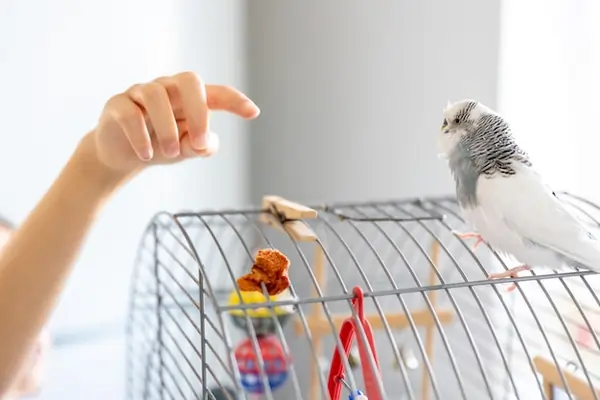
bird accessories play an important role in ensuring the comfort and wellbeing of pet birds. Items such as cages, perches, feeders, and toys help create a suitable living environment. Choosing the right cage size and materials is essential for safety. Regular cleaning and maintenance of accessories prevent health issues. Providing enrichment through toys keeps birds active and reduces stress. Proper accessories contribute to a healthy and engaging habitat.
Bird Accessories – The Complete Guide to Essential Equipment for Indian Bird Owners
Providing a bird with appropriate accessories is the practical foundation of responsible bird ownership — the difference between a pet bird that thrives in a stimulating, comfortable environment and one that suffers the physical and psychological consequences of inadequate housing, insufficient enrichment, and inappropriate nutrition. India's bird-keeping culture is rich and diverse, encompassing everything from the budgerigar kept by a first-time bird owner in a Mumbai apartment to the african grey Parrot maintained by an experienced aviculturist in a Delhi bungalow, and the accessories appropriate for each of these contexts vary significantly. This comprehensive guide covers the essential and supplementary accessories that Indian bird owners need for their feathered companions — from cage selection and placement, to feeding accessories, enrichment and foraging toys, grooming supplies, health monitoring tools, and the supplementary additions that enhance bird welfare and bird-owner relationship quality in Indian conditions.
bird accessories in India are increasingly available through specialist bird shops, general pet shops, and online retailers — a market that has grown substantially alongside India's growing appreciation of birds as companion animals. Understanding what to select from this expanding market, and why specific accessories matter for bird welfare rather than being merely decorative, allows Indian bird owners to make informed, purposeful choices that produce the best outcomes for their birds.
Cage Selection – The Most Important Bird Accessory
The cage is the most important single accessory in any bird owner's collection — the environment where the bird spends a significant proportion of its life and whose size, bar spacing, bar material, and internal organisation directly determines the quality of that life. Cage selection errors are among the most common and most consequential mistakes in Indian bird keeping, typically involving cages that are too small, have incorrect bar spacing (either too close for the bird to grip comfortably or too wide allowing escape or entrapment), are made of inappropriate materials, or have inadequate structural integrity for birds that chew aggressively.
Cage size should be large enough for the bird to fully extend its wings without touching any surface, and ideally large enough to fly short distances within the cage. For budgerigars and cockatiels — the most commonly kept cage birds in India — the minimum cage is 60 cm wide x 45 cm deep x 60 cm tall, with wider being more important than taller for species that fly horizontally. For medium parrots including conures and Indian Ringnecks, minimum dimensions are 90 cm wide x 60 cm deep x 90 cm tall. For large parrots including African Greys, Amazons, and Cockatoos, the minimum is 120 cm x 90 cm x 150 cm — dimensions that represent a substantial cage by any standard. Powder-coated steel caging is the most practical material for most Indian bird owners — more durable than plastic, affordable, and free of the zinc and lead toxicity risk that some wrought-iron and galvanised steel cages present. Stainless steel is the ideal material for large parrot cages given its resistance to the heavy chewing that large parrots apply to caging, but its cost places it beyond most Indian buyers' budgets except for large collections or very high-value birds.
Essential Bird Accessories by Category
| Accessory Category | Essential Items | Price Range (₹) | Priority Level |
|---|---|---|---|
| Feeding Bowls and Dispensers | Heavy ceramic bowls; water dispensers; seed hoppers | ₹50 – ₹500 per item | Essential — multiple bowls per bird minimum |
| Perches (natural wood) | Natural wood branches of varying diameter; rope perches | ₹100 – ₹800 per perch | Essential — foot health depends on perch variety |
| Foraging Toys | Food-hiding toys; foraging boxes; shreddable materials | ₹150 – ₹2,000 per toy | Very important — prevents boredom and feather problems |
| Bathing Facilities | Shallow bathing dish; misting bottle | ₹100 – ₹600 | Important — hygiene and comfort |
| Cuttlebone and Mineral Block | Cuttlebone; calcium mineral block | ₹50 – ₹200 | Essential — calcium and beak maintenance |
| Cage Cover | Breathable dark cover for night-time sleep | ₹200 – ₹800 | Important — ensures adequate uninterrupted sleep |
| Play Stand | Tabletop or floor stand for out-of-cage activity | ₹500 – ₹5,000 | Important for regularly handled birds |
| Travel Carrier | Secure ventilated carrier for veterinary visits | ₹500 – ₹3,000 | Essential — safe veterinary transport |
Perches – The Critical Foot Health Accessory
Perch selection and variety is one of the most important and most commonly overlooked aspects of Indian bird accessory provision. Birds stand on perches for the overwhelming majority of their lives, and the perch material, diameter, and texture directly determines foot health over the long term. Uniform-diameter, smooth commercial wooden dowels — the standard perch supplied with most Indian commercial bird cages — cause pressure sores and bumblefoot (pododermatitis) from the constant contact pressure of uniform surface on the same foot-surface areas with every perch. Natural branches of varying diameter — sourced from non-toxic trees including apple, guava, neem, and eucalyptus — provide the varying grip positions that distribute foot pressure across different areas with each landing, preventing the concentrated pressure sores of uniform perches.
Rope perches of appropriate diameter are an excellent complement to natural wood perches — the yielding, textured surface distributes foot pressure differently and provides grip variety. Concrete or sandy perches, while popular in Indian bird shops as "nail-trimming" solutions, should be used with caution — one or two per cage maximum, and not as primary perches, as their abrasive surfaces cause skin damage and sores when birds rest on them for extended periods. Provide at least three different-diameter perches per bird, positioned at different heights and positions to encourage movement and prevent the perch monotony that contributes to foot problems.
Bird Enrichment Accessories – Essential for Psychological Health
Enrichment accessories — the foraging toys, shreddable materials, puzzle feeders, and environmental complexity items that engage a bird's intelligence and activity during the hours between social interaction with its owner — are among the most important welfare investments available to Indian bird owners. Parrots in particular have been selected by evolution for intelligence and behavioural complexity that, in the wild, is occupied by foraging, social interaction, flight, and exploration. In captivity, these natural behaviour channels are restricted, and enrichment accessories provide the behavioural outlets that prevent the chronic boredom, feather-destructive behaviour, and psychological deterioration that inadequately enriched birds develop.
Foraging toys that require the bird to work for food — extracting seeds from cavities, unwrapping food from paper, solving puzzle compartments to access treats — are the most behaviourally valuable enrichment category. In the wild, a parrot spends the majority of its waking hours foraging — the captive parrot fed from a full food bowl has this fundamental behavioural need entirely removed from its daily experience, and foraging toys partially restore it. Indian bird owners can create effective foraging toys inexpensively using paper bags, cardboard tubes, cloth strips, and natural materials that require no purchase from specialist suppliers. Shreddable toys made from palm leaf, dried corn husk, willow branches, and similar natural materials allow the destructive chewing behaviour that is natural and healthy for parrots and that also provides beak maintenance alongside behavioural enrichment.
Nutrition and Feeding Accessories
Feeding accessories include both the physical bowls and dispensers that deliver food and the food supplements that complete nutritional requirements. Multiple food bowls — separate dishes for seed or pellets, fresh food, water, and mineral supplements — ensure that the bird has access to all dietary components without contamination between categories. Heavy ceramic or stainless steel bowls are preferable to lightweight plastic, which tips easily, absorbs odours, and scratches in ways that harbour bacteria. Water dispensers should be cleaned and refilled daily in India's warm climate where bacterial growth in standing water is rapid.
Cuttlebone — the dried internal shell of the cuttlefish, available at Indian bird shops at minimal cost — is an essential accessory for all cage birds. It provides calcium supplementation critical for egg production, bone density, and blood clotting, and its texture provides beak maintenance that helps maintain appropriate beak length and shape. Mineral blocks containing multiple trace minerals supplement the calcium of cuttlebone with additional nutritional complexity. Fresh leafy greens clipped to the cage bars through a special clip holder encourage consumption of vegetable material that many birds are reluctant to eat from a bowl — the clip presentation that requires the bird to work at the greens mimics natural foraging and increases fresh food acceptance.
Frequently Asked Questions About Bird Accessories in India
What is the minimum cage size for a budgerigar in India? The minimum cage for a single budgerigar is 60 cm wide x 45 cm deep x 60 cm tall — and wider is more important than taller, as budgerigars fly horizontally. For a pair of budgerigars, increase to 90 cm wide minimum. Many commercial cages sold in India for budgerigars are smaller than this minimum and should be replaced with appropriate-sized caging for the birds' welfare.
Are plastic perches safe for birds? Smooth plastic perches are not recommended as primary perches for the same reason that uniform wooden dowels are inadequate — they provide no surface variation, strain foot tendons through uniform grip pressure, and cannot be shaped or chewed to provide natural beak maintenance opportunities. Natural wood branches or rope perches are preferable to plastic for primary perch provision.
How do I clean bird accessories safely in India? Food and water bowls should be washed daily with hot water and dish soap, rinsed thoroughly, and dried before refilling. Perches should be scrubbed with a stiff brush and hot water when visibly soiled and allowed to dry completely before replacing. The cage itself should be cleaned weekly with a dilute vinegar solution or bird-safe disinfectant (chlorine-based disinfectants are effective but must be rinsed completely as residue is toxic to birds). Never use chemical air fresheners, scented candles, non-stick cookware fumes, or aerosol sprays near birds — these are acutely toxic to the bird respiratory system.
Where can I find good quality bird accessories in India? Specialist bird shops in major Indian cities carry the widest range of appropriate accessories. Online pet retailers (Heads Up For Tails, PetsWorld, PetSutra, and various city-specific bird specialty retailers) provide access to international brands and specialist items not available in local shops. The Indian bird-keeping community on Facebook groups and Instagram provides recommendations for specific products that have been used and evaluated by experienced Indian bird owners — particularly valuable for high-cost items like large parrot cages where purchase decision quality matters significantly.
Bird Safety Accessories – Protecting Your Bird in the Indian Home
Indoor safety for pet birds in Indian homes requires attention to several specific hazards that are common in Indian household environments. Ceiling fans — ubiquitous in Indian homes for heat management — are among the most dangerous hazards for free-flying birds, with fan collisions causing fatal injuries that are entirely preventable by ensuring no fans are running when birds are out of their cages. This simple management rule must be inviolable in any Indian household with free-flying birds. Non-stick cookware (Teflon or PTFE-coated pans) releases fumes when overheated that are acutely toxic to birds in the same building — the avian respiratory system is extraordinarily sensitive to airborne toxins, and the fumes from a single overheated non-stick pan can kill multiple birds within minutes. Indian bird owners should use only stainless steel, cast iron, or ceramic cookware, or ensure birds are housed in rooms that are completely isolated from cooking fumes.
Ceiling fan guards — wire mesh enclosures that surround ceiling fan blades — are available in India and represent an important safety investment for households where birds are regularly given free flight time and where ceiling fans are a permanent feature of the room. Open windows and doors create escape risks for domestically-kept birds — window screens of appropriate mesh size prevent escape while maintaining ventilation, and door management protocols (always close before opening cage) prevent the accidental escape that results in distress searches and too often in the permanent loss of beloved birds. These safety accessories and management practices represent the responsible approach to bird ownership that protects the investment made in birds that may live decades and that represent genuine emotional attachments for their Indian families.
The Indian bird-keeping community encompasses enormous diversity and accumulated knowledge, from the traditional budgerigar-keeping tradition that spans generations of Indian households to the sophisticated modern parrot breeding and enrichment culture that has developed as awareness of bird welfare has grown. Engaging with this community through bird clubs, Facebook groups, Instagram accounts, and veterinary specialists who focus on avian medicine produces better bird ownership outcomes through the shared knowledge of what works in Indian conditions, what birds need, and how to provide it. Every Indian bird owner who invests in appropriate accessories, correct nutrition, and consistent enrichment is contributing to a culture of bird welfare that benefits every bird in every Indian home that community knowledge eventually reaches.
The accessories described in this guide are the physical expressions of the knowledge, care, and commitment that responsible Indian bird ownership requires — each item chosen with understanding of what the bird needs rather than what looks attractive or costs the least. Together, they create the environment in which the extraordinary intelligence, emotional expressiveness, and individual personality of companion birds can be fully expressed — where the bird is not merely surviving in captivity but genuinely living well within it. That distinction, between survival and genuine flourishing, is what quality accessories, correct nutrition, and engaged ownership make possible for Indian birds.
Every informed, committed Indian pet owner who provides what their animal genuinely needs — rather than what is convenient, cheapest, or most commonly done — is contributing to the culture of excellent animal care that benefits every pet in every household that community knowledge and shared standards eventually reach. This guide has aimed to provide the knowledge foundation for that excellence. The rest is the daily, consistent, caring practice that makes the difference between animals that survive in our care and animals that genuinely thrive in it.