Dog Accessories - Complete Guide
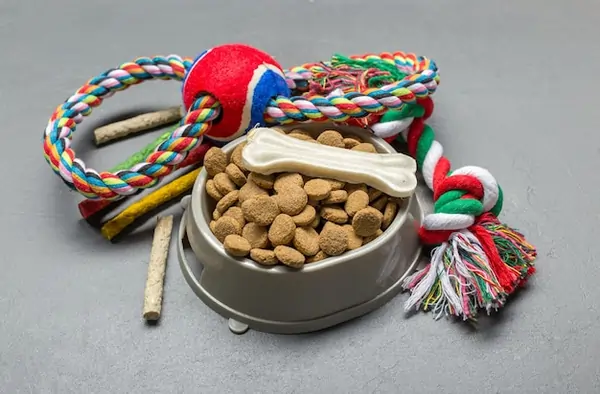
dog accessories are essential for managing the daily needs and comfort of pet dogs. Items such as collars, leashes, beds, and feeding bowls support routine care. High-quality accessories ensure safety and durability. Regular cleaning and proper usage help maintain hygiene. Selecting the right size and material is important for comfort. These accessories contribute to better control, training, and overall wellbeing of dogs.
Dog Accessories – The Complete Guide to Essential Equipment for Indian Dog Owners
India's dog-owning population has grown dramatically over the past decade, and alongside this growth has come a corresponding expansion in the range and quality of dog accessories available to Indian pet owners. From the most basic necessities of a collar, leash, and food bowl to the sophisticated range of modern pet products including GPS trackers, orthopedic beds, automatic feeders, and enrichment toys backed by behavioural science, the Indian dog accessories market now offers everything an informed owner needs to provide their dog with the highest standard of care and comfort. This comprehensive guide covers all the essential and beneficial dog accessories available in India — what to prioritise, what to avoid, how to select the right products for your dog's specific size, breed, age, and lifestyle, and how to build an accessory toolkit that genuinely serves your dog's welfare rather than simply reflecting what is fashionable or heavily marketed.
Dog accessories serve a range of functions — from the purely practical (identification, restraint, waste management, feeding) to the welfare-enhancing (enrichment, comfort, health support) to the relational (training aids that improve communication and strengthen the human-dog bond). Understanding the purpose each accessory serves, and selecting accordingly for your specific dog's needs in your specific Indian context, produces a purposeful, effective accessory collection that works harder for your dog than a random accumulation of purchases inspired by marketing alone.
Collars, Harnesses, and Identification – The Foundation of Safe Dog Ownership
Every dog in India must have reliable identification and appropriate control equipment — the combination of collar or harness, leash, and identification that allows safe management in public and rapid recovery if the dog becomes lost. Selecting these foundational accessories correctly is the most practically consequential accessory decision any Indian dog owner makes.
The collar versus harness debate has largely been settled by current understanding of canine anatomy and behaviour: harnesses are generally preferable to neck collars for most Indian dogs, particularly medium to large breeds, puppies, brachycephalic breeds, and any dog with a history of neck or tracheal problems. A collar applies pulling force directly to the neck and trachea; a harness distributes this force across the chest and shoulder, eliminating tracheal pressure and allowing the dog to walk more comfortably without the reflexive pulling response that collar pressure often triggers. Front-clip harnesses — with the leash attachment point on the chest rather than the back — provide additional gentle steering control that reduces pulling without the aversive pressure of choke chains or prong collars. Back-clip harnesses work well for already-trained non-pulling dogs. Neck collars remain appropriate as identification holders for dogs that are harness-walked, providing the tag attachment point that harnesses often lack.
Microchipping — a permanent electronic identification implant under the skin, readable by the scanner available at most veterinary practices — is the most reliable identification method and should be considered essential for every Indian dog regardless of whether the dog also wears a visible ID tag. A collar can be removed, an ID tag can be lost, but a microchip travels with the dog permanently. Register the microchip number with a national pet registry along with current contact details, and update the registration if you move or change phone numbers. The combination of collar with current ID tag and microchip provides the strongest possible identification support for a lost Indian dog.
Essential Dog Accessories – Category by Category
| Category | Essential Item | Price Range (₹) | Selection Priority |
|---|---|---|---|
| Identification | Microchip + ID tag + collar | ₹500 – ₹2,000 | Critical — foundation of safety |
| Walking Equipment | Front-clip harness or standard flat collar; 120-150cm leash | ₹400 – ₹2,500 | Essential daily use item |
| Food and Water Bowls | Heavy stainless steel or ceramic; size appropriate to breed | ₹200 – ₹1,200 | Essential; quality matters for hygiene |
| Dog Bed / Sleeping Area | Washable padded bed or elevated cot; size appropriate | ₹500 – ₹5,000 | Important for joint health and comfort |
| Crate / Carrier | Appropriately sized wire or plastic crate; travel carrier | ₹1,500 – ₹8,000 | Important for training and safe transport |
| Grooming Kit | Brush appropriate to coat type; nail clippers; ear cleaner | ₹300 – ₹2,000 | Essential for health maintenance |
| Toys | Chew toys; fetch toys; interactive puzzle feeders | ₹200 – ₹2,000 | Important for mental and physical health |
| Waste Management | Biodegradable poop bags; outdoor waste dispenser | ₹100 – ₹500/month | Essential for responsible public behaviour |
Leashes and Walking Accessories for Indian Dogs
The leash is one of the most used accessories in any Indian dog owner's toolkit — used multiple times daily for the walks that are essential to most dogs' physical and mental health. Selecting an appropriate leash requires consideration of the dog's size and strength, the walking environment (crowded urban streets versus quiet residential areas versus parks), and the owner's handling capability. Standard flat webbing leashes of 120 to 150 centimetres are appropriate for most everyday walking situations — long enough to allow the dog some natural movement variation while short enough for safe control in busy Indian traffic and pedestrian environments. Retractable leashes are generally not recommended for urban Indian conditions where sudden pulls toward traffic, other dogs, or street animals can occur without warning — the thin cord and the delayed braking mechanism of retractable leashes provide insufficient control in these situations.
Training leashes of 3 to 5 metres length are valuable for recall training in open spaces, providing enough freedom for the dog to range while the owner maintains a safety connection. Long lines of 10 to 15 metres are used for the distance work phases of recall training. Hands-free leashes that attach to a waist belt allow Indian dog owners who run or cycle with their dogs to maintain control while keeping both hands free — increasingly popular among urban Indian fitness enthusiasts who incorporate their dogs into exercise routines. Traffic handles — short loops at the collar end of some leashes — provide close-grip control when navigating traffic, crowded markets, or veterinary waiting rooms where maximum control is needed.
Dog Beds and Comfort Accessories in India
Dog beds and sleeping accessories serve both comfort and health functions that extend beyond the obvious. A dog that sleeps on hard floors throughout its life accumulates pressure sore and callus development on bony prominences (elbows, hips, hocks) that can become chronic health problems — particularly in large breeds whose body weight creates substantial floor contact pressure. An appropriately cushioned sleeping surface distributes this weight more evenly and prevents the callus formation that is common in inadequately bedded large Indian dogs.
For older dogs and breeds predisposed to joint conditions including hip dysplasia and arthritis — Labrador Retrievers, German Shepherds, and large breeds generally — orthopaedic memory foam beds provide therapeutic support that measurably reduces joint discomfort and improves sleep quality. The investment in a quality orthopaedic bed for a large breed dog from middle age onwards is a genuine health intervention rather than a luxury, and its cost is trivial compared to the veterinary treatment costs of the joint deterioration that inadequate sleeping surface contributes to over years of accumulated hard-floor sleeping. Raised elevated beds — with a fabric surface suspended above the floor on a frame — are excellent for the Indian summer, allowing air circulation beneath the dog that cools more effectively than a floor-contact bed and is particularly valuable for heavy-coated breeds during India's hot months.
Dog Enrichment and Toy Accessories
Mental enrichment is as important as physical exercise for most dog breeds, and the accessories that provide it — puzzle feeders, sniff mats, Kong toys and similar stuffable enrichment items, and interactive games — are among the highest-welfare-impact accessories available to Indian dog owners. A dog that receives adequate physical exercise but no mental stimulation is often as restless and destructive as one that receives no exercise at all; a dog that receives both physical exercise and regular mental enrichment is typically calm, well-adjusted, and behaviourally manageable.
Food-based enrichment is the most reliably effective enrichment category for most dogs — using the dog's daily food ration as the reward medium for enrichment activities rather than providing it in a food bowl removes the boring "meal in thirty seconds" from the dog's day and replaces it with ten to thirty minutes of engaged, satisfied searching, sniffing, and solving. A Kong stuffed with the dog's daily food and frozen overnight provides a thirty-minute breakfast challenge; a scatter feed across a sniff mat provides a twenty-minute foraging session; a puzzle feeder of appropriate difficulty level provides the cognitive engagement of food acquisition that domestic dogs retain from their foraging ancestral heritage. These simple enrichment practices transform the quality of an Indian dog's daily experience at negligible additional cost beyond the dog's normal food allocation.
Physical toys including fetch balls, tug ropes, and flirt poles provide the physical play engagement that satisfies the predatory drive in most dogs. Quality rubber chew toys including Kong-type enrichment toys, Nylabone products, and similar durable chew items satisfy the jaw exercise and chewing drive that inadequate alternatives redirect toward furniture, shoes, and household items. Indian dog owners who provide appropriate chew toys from puppyhood redirect this natural drive appropriately and avoid the destructive chewing that inadequate chew provision creates.
Training Accessories for Indian Dog Owners
Training accessories support the communication and learning process that develops the well-behaved, responsive Indian dog — and choosing them correctly reflects the training philosophy that current evidence supports. Force-free, positive reinforcement training has been established by the scientific community as both more effective and more welfare-positive than aversive training methods, and the accessories that support positive training are correspondingly different from those associated with aversive approaches.
A training treat pouch — a small belt-worn pouch that keeps high-value training treats immediately accessible during training sessions — is one of the most practically useful training accessories, ensuring the reward can be delivered within the second of correct behaviour performance that maximises learning reinforcement. A clicker (a small handheld device that produces a consistent click sound to mark correct behaviour at the exact moment it occurs) significantly improves training precision for owners who use marker-based training. Target sticks allow luring of specific body positions and movements in shaping complex behaviours. Long training leads allow distance work on recall and other distance commands. Quality training accessories support the investment in positive-reinforcement training classes that is one of the most impactful things any Indian dog owner can invest in — for the dog's welfare, the owner's management confidence, and the quality of the human-dog relationship that good training consistently deepens.
Dog Health and Safety Accessories for India
India's specific disease environment — the year-round tick pressure, the extreme summer heat that threatens dogs particularly of heat-sensitive breeds, and the urban hazards including traffic and stray dog encounters — creates specific accessory needs for Indian dogs that owners in temperate countries without these pressures do not face.
Tick prevention product dispensers and tick removal tools are essential accessories for all Indian dogs. Tick-check post-walk combing tools help identify ticks before they complete engorgement and transmit disease. Cooling accessories including cooling mats, cooling vests, and portable water dispensers with fold-out drinking bowls are important safety accessories for Indian dogs exercised in warm weather, particularly for brachycephalic breeds who cannot dissipate heat effectively and are at risk of heat stroke in Indian summer conditions. Dog booties — while not universally accepted by Indian dogs without conditioning — protect paws from the hot pavements that can cause burns in summer and from the broken glass, construction debris, and other hazards common in Indian urban environments. A well-stocked canine first aid kit including wound dressing, saline wash, tick-removal forceps, and emergency contact information for the nearest 24-hour veterinary hospital is a preparedness accessory that every responsible Indian dog owner should maintain and know how to use.
Monthly Cost of Essential Dog Accessories in India
| Accessory Category | Monthly Cost (₹) | Notes |
|---|---|---|
| Poop Bags (biodegradable) | ₹150 – ₹400 | Based on daily walks; responsible public disposal essential |
| Toy Replacement and Enrichment | ₹200 – ₹800 | Durable toys last months; enrichment feeders replaced less often |
| Grooming Supplies | ₹100 – ₹500 | Brush, shampoo, nail care; varies by coat type |
| Training Treats | ₹200 – ₹600 | High-value treats for training sessions; daily use |
| Tick Prevention Products | ₹400 – ₹1,500 | Monthly oral or spot-on; essential year-round in India |
| Equipment Maintenance and Replacement | ₹100 – ₹400 | Collar, harness, leash gradual wear; periodic replacement |
| Total Estimate | ₹1,150 – ₹4,200 | Tick prevention and enrichment are the significant ongoing variable costs |
Frequently Asked Questions About Dog Accessories in India
Should I use a choke chain or prong collar on my pulling dog? No — choke chains and prong collars work through aversive pain and pressure, which suppresses pulling through discomfort rather than teaching the dog what the owner wants. These methods are associated with increased anxiety, aggression, and owner-directed fear in dogs, and produce worse long-term outcomes than positive reinforcement-based loose-leash training. A front-clip harness combined with proper loose-leash training using high-value rewards is both more effective and more welfare-positive for Indian dogs that pull on the leash.
What is the best bed for a large breed Indian dog? An orthopaedic memory foam bed of appropriate size for the dog to fully stretch out on provides the best joint health support for large breeds in Indian conditions. For Indian summers, an elevated mesh cot provides cool sleeping and is the preferred seasonal choice. Many Indian large breed owners maintain both — the elevated cot for the hot months and the orthopaedic foam bed for the cooler months — switching seasonally for the dog's comfort.
Are GPS dog trackers worth buying in India? For dogs that spend time outdoors in large spaces — farm dogs, dogs in large gardens, or dogs in areas where escapes are a risk — GPS trackers provide valuable real-time location information that accelerates recovery when a dog goes missing. Urban apartment dogs that are leashed for all outdoor time benefit less but still provide peace of mind. Indian-compatible GPS trackers work with domestic SIM cards and cellular networks; confirm Indian network compatibility before purchase as some internationally marketed products use frequencies not supported by Indian carriers.
How do I choose the right harness size for my Indian dog? Measure the dog's girth (circumference around the chest immediately behind the front legs) and neck circumference with a flexible tape measure. Most harnesses specify these measurements in their sizing guides. A correctly fitted harness should allow two fingers to slide comfortably under any strap — tight enough that the dog cannot back out of it, loose enough that it does not restrict movement or breathing. Re-measure as puppies grow and check fit monthly on adult dogs whose weight may fluctuate with seasonal activity changes.
The Best Investment in Dog Accessories – Knowledge and Time
The most valuable dog accessory available to any Indian dog owner is not a physical product at all — it is knowledge about what dogs genuinely need and the time invested in providing it. An Indian dog with the most complete accessory collection available, kept by an owner who lacks the knowledge of how to use those accessories purposefully or the time to invest in daily interaction, training, exercise, and enrichment, is less well-served than a dog with modest accessories kept by an owner whose engaged, informed daily care genuinely meets the dog's physical and psychological needs. This is not an argument against quality accessories — it is an argument for keeping accessory investment in its proper perspective within the fuller picture of what excellent dog ownership actually involves.
The Indian dog owner who completes their accessories collection thoughtfully — starting with the essentials that keep the dog safe and healthy, adding the enrichment items that keep the dog psychologically stimulated, and maintaining the veterinary monitoring and parasite prevention that protects long-term health — and who accompanies this physical investment with the daily engagement of training, play, exercise, and genuine relationship-building, will have a dog of the best possible wellbeing that Indian dog ownership can produce. That is the standard that this guide, and every dog-related resource in the Pethouse India series, has aimed to support: not the minimum standard of keeping a dog alive in Indian conditions, but the excellent standard of keeping a dog genuinely thriving, genuinely happy, and genuinely well-loved in the diverse, challenging, and deeply rewarding context of modern Indian life.