Aquarium Fish Accessories - Complete Guide
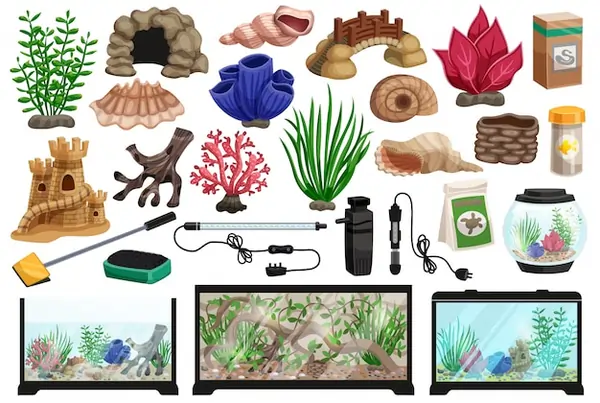
Aquarium fish accessories are essential for maintaining a healthy and stable aquatic environment. These include filters, heaters, air pumps, and lighting systems that support water quality and fish health. Proper selection of accessories ensures efficient filtration and oxygen supply. Regular maintenance of these tools is necessary to prevent water contamination. Investing in high-quality aquarium accessories improves the lifespan of fish and enhances the overall appearance of the tank.
Aquarium Fish Accessories – The Complete Guide to Essential Equipment for Indian Fish Keepers
Setting up and maintaining a successful aquarium in India requires the right equipment — the filters, heaters, lighting, test kits, and supplementary accessories that transform a glass box full of water into a functioning aquatic ecosystem capable of supporting healthy, thriving fish. The range of aquarium accessories available in India has expanded dramatically over the past decade, with quality international brands now accessible through online retailers and specialist aquarium shops in major cities alongside a range of economy options of varying reliability. Choosing the right accessories for your specific aquarium — appropriate to the fish you keep, the size of your tank, and your experience level — is one of the most practically important decisions in the fishkeeping hobby. This comprehensive guide covers all the essential aquarium accessories available to Indian fishkeepers, from the absolutely non-negotiable equipment without which no aquarium can function properly, to the supplementary additions that significantly enhance fish health, viewing pleasure, and maintenance convenience.
This guide covers equipment for freshwater aquariums primarily, with notes on marine-specific equipment differences where relevant. The principles of good equipment selection — appropriateness to tank size and fish species, reliability over price-minimisation, and understanding what each piece of equipment actually does — apply equally to freshwater and marine setups and form the foundation of equipment choices that produce successful long-term aquariums.
Essential Aquarium Accessories – The Non-Negotiable Basics
Certain accessories are non-negotiable for any aquarium — without them, water quality deteriorates rapidly and fish health is compromised within days or weeks regardless of how well other aspects of care are managed. Understanding why these items are essential, and what to look for when selecting them in the Indian market, ensures that the aquarium's foundational equipment genuinely performs its critical functions.
Filtration is the single most important aquarium accessory — the system that removes harmful ammonia from fish waste, converts it to less toxic nitrite and then to relatively harmless nitrate, and maintains the water clarity and quality that fish health requires. The filter houses the beneficial bacteria that perform this biological filtration, mechanically removes solid waste particles, and in many cases provides chemical filtration through activated carbon or other media. Indian aquarium shops and online retailers offer a range of filter types appropriate for different aquarium sizes and fish types: hang-on-back filters (HOB) are the most popular choice for most Indian community tanks; canister filters provide superior filtration volume and water polishing for larger tanks or demanding species; sponge filters powered by air pumps provide the gentle, fry-safe filtration appropriate for small tanks and breeding setups; internal power filters are compact options for smaller tanks. Select a filter rated for at least the volume of your aquarium — many experienced Indian fishkeepers recommend filters rated for one and a half to two times the tank volume for adequate biological filtration capacity.
Water heating is essential for all tropical fish species — which includes virtually all commonly kept freshwater aquarium fish in India except goldfish. Submersible glass or titanium aquarium heaters with adjustable thermostats are the standard, available in wattages appropriate to tank volume (a rough guideline is 1 watt per litre for well-insulated rooms in Indian tropical conditions, with higher wattage for cooler North Indian winters). Quality heaters with accurate, reliable thermostats are critically important — heaters that malfunction and cook fish are among the most distressing aquarium accidents, and the modest additional cost of a quality heater from a reputable brand is insurance against this risk.
Aquarium Filtration – Types and Selection Guide for India
| Filter Type | Best For | Price Range (₹) | Key Advantage |
|---|---|---|---|
| Hang-On-Back (HOB) Filter | Community tanks 40-200 litres | ₹600 – ₹3,500 | Easy media access; good mechanical filtration |
| Canister Filter | Larger tanks 100+ litres; planted tanks | ₹2,500 – ₹12,000 | High media volume; quiet; excellent water polishing |
| Sponge Filter (air-powered) | Small tanks, fry tanks, breeding setups | ₹100 – ₹500 | Gentle flow; fry-safe; cheap and reliable |
| Internal Power Filter | Small to medium tanks; beginners | ₹300 – ₹2,000 | Compact; no external parts; affordable |
| Undergravel Filter | Basic community tanks | ₹200 – ₹800 | Simple; no moving parts; less effective than above options |
| Wet/Dry Sump (marine) | Marine and large planted tanks | ₹5,000 – ₹30,000+ | Maximum filtration capacity; highly customisable |
Water Testing Equipment – The Aquarist's Most Important Tool
Water testing equipment is the diagnostic tool that tells Indian fishkeepers whether their aquarium water is safe for fish. Without regular testing, water quality problems — elevated ammonia, nitrite, incorrect pH — develop invisibly until fish health deteriorates. A basic liquid test kit covering ammonia, nitrite, nitrate, and pH is the minimum testing toolkit for any Indian aquarium keeper, providing accurate measurements of the parameters most critical to fish health. Liquid test kits are significantly more accurate than test strips and are the appropriate choice for any serious fishkeeper — the modest additional cost relative to test strips is trivial compared to the value of the fish and the cost of treatments for disease triggered by water quality problems that accurate testing would have revealed and prevented.
A digital pH meter, while more expensive than liquid test kits, provides immediate, highly accurate pH readings without the colour-comparison interpretation that makes liquid test kits prone to reading errors in India's warm, colour-distorting conditions. For Indian marine aquarists, a refractometer for salinity measurement is essential — swing-arm hydrometers widely sold in India are notoriously inaccurate and should be replaced with a quality optical or digital refractometer for reliable specific gravity measurement. Advanced Indian aquarists maintaining reef aquariums or soft-water species setups benefit from additional testing for alkalinity, calcium, magnesium, and TDS — parameters that affect water chemistry in ways that basic testing kits do not capture.
Aquarium Lighting for Indian Fish Keepers
Aquarium lighting serves multiple functions — providing the light spectrum that makes fish colours visible to their best advantage, supporting the photosynthesis of live aquatic plants, regulating the day-night cycle that maintains natural fish behaviour patterns, and creating the visual effect that makes the aquarium aesthetically pleasing to observe. The appropriate lighting system depends primarily on whether the aquarium contains live plants (which require specific light spectra and intensity for photosynthesis) or is a fish-only setup (which requires only the intensity and spectrum that shows fish colours to best advantage without plant photosynthesis demands).
LED lighting has become the dominant aquarium lighting technology in India, replacing the fluorescent tubes that were standard until recently. Quality LED lights designed for aquariums provide full-spectrum illumination at significantly lower electricity consumption than equivalent-intensity fluorescent tubes, with lifespans measured in years rather than months. For planted aquariums in India, LED lights with PAR (Photosynthetically Active Radiation) ratings appropriate for the target plant types are available from aquarium specialist suppliers; low-tech planted tanks with hardy plants like Java fern, anubias, and Java moss can function with economical full-spectrum LED lights, while high-tech planted tanks with demanding plant species require higher-intensity, higher-PAR specialist plant lights. For fish-only aquariums, full-spectrum white LED lights of appropriate intensity for the tank depth provide the viewing quality that makes fish colours appear most vivid and natural.
Essential Accessories for Indian Aquarium Maintenance
Beyond the primary equipment of filtration, heating, and lighting, several supplementary accessories make the regular maintenance that aquarium health requires significantly easier and more effective in Indian conditions. A gravel vacuum (siphon) — a tube-and-hose assembly that simultaneously removes bottom detritus and performs water changes — is the most time-efficient tool for the regular partial water changes that are the single most important maintenance practice in any aquarium. Water conditioner (sodium thiosulfate-based dechlorinator) is essential for treating tap water before adding it to the aquarium, neutralising chlorine and chloramine that would kill beneficial filter bacteria and harm fish. A quality glass algae scraper or magnetic glass cleaner maintains glass clarity between full tank clean sessions. A dedicated aquarium net appropriate to the size of fish being managed allows safe fish handling during tank maintenance and disease treatment.
Indian Market Aquarium Accessories – Budget vs Quality
The Indian aquarium accessories market offers products across a wide price and quality range, from economy options that may provide acceptable performance to quality international brands that offer superior reliability, accuracy, and longevity. The general principle that guides sensible selection is to prioritise quality for equipment whose failure is most costly in fish lives and tank stability — heaters, filters, and water test kits warrant investment in reliability, while decorations, substrate, and some supplementary accessories allow more cost-consciousness without material risk to fish welfare. A quality heater that does not malfunction and cook fish is worth three times the price of an economy option; an economy artificial decoration that the fish ignore serves exactly as well as an expensive equivalent. Applying this principle of quality where it matters, economy where it does not, produces the most cost-effective Indian aquarium equipment portfolio.
Frequently Asked Questions About Aquarium Accessories in India
What is the minimum equipment needed to start an aquarium in India? The absolute minimum for a basic freshwater community aquarium is: an appropriately sized glass or acrylic tank; a filter rated for the tank volume; a heater with thermostat for tropical fish; a basic liquid test kit for ammonia, nitrite, and pH; a water conditioner (dechlorinator); a gravel vacuum for water changes; an aquarium net; and a timer for the light cycle. This minimum setup, properly used with regular water changes, supports healthy fish. Additional equipment including CO2 systems, automatic water change systems, and specialised supplements adds convenience and capability but is not essential for basic successful fishkeeping.
Where can I buy quality aquarium accessories in India? Quality aquarium accessories are available through specialist aquarium shops in major Indian cities, through dedicated online aquarium retailers (several of which operate from Mumbai, Chennai, and Bangalore), and through general online marketplaces that stock aquarium brands. Local fish shops vary significantly in the quality and range of equipment they stock; specialist aquarium shops in larger cities typically carry better-quality international brands alongside economy domestic options. The growing Indian aquarium community on social media and forums provides guidance about specific products that have performed well or poorly in Indian conditions — a valuable supplement to general product specifications.
Do I need a CO2 system for a planted aquarium in India? Not for low-tech planted aquariums with hardy plant species like Java fern, anubias, cryptocorynes, and mosses — these plants grow successfully without CO2 injection using the natural CO2 produced by fish respiration. For high-tech planted aquariums with demanding plant species and the dense, colourful plant growth of competition aquascaping, pressurised CO2 injection is beneficial or necessary for optimal plant growth. CO2 systems (pressurised cylinders, regulators, diffusers) are available from specialist Indian aquarium suppliers at costs ranging from ₹2,000 for basic systems to ₹15,000 or more for comprehensive setups.
How often should I replace aquarium filter media? Biological filter media — ceramic rings, bio-balls, sintered glass — should never be thrown away entirely and replaced, as they house the essential beneficial bacteria of the nitrogen cycle. Replace or rinse only a portion of biological media at a time, using tank water rather than tap water to avoid chlorine killing beneficial bacteria. Mechanical filtration media (filter floss, sponge pads) should be rinsed in tank water when flow is reduced, and replaced entirely when they can no longer be cleaned. Activated carbon should be replaced monthly as it becomes saturated and may release absorbed chemicals back into the water.
Advanced Aquarium Accessories for Experienced Indian Fish Keepers
As Indian fishkeepers advance beyond basic community aquarium keeping toward planted aquariums, species-specific setups, and marine reef systems, a range of advanced accessories becomes relevant and increasingly important for the quality of the aquarium ecosystem. CO2 injection systems for planted aquariums, aquarium chillers for cold-water or marine setups, automatic water change systems, aquarium controllers and monitoring systems, and specialist lighting for reef aquariums represent the equipment investments that experienced Indian aquarists make as their hobby deepens.
Automatic water change systems — pumps and controllers that perform scheduled small daily water changes rather than requiring weekly manual changes — are particularly valuable in the Indian context where busy urban professional lifestyles make consistent scheduled maintenance challenging. A system that performs daily automatic small water changes maintains more stable water parameters than the weekly larger changes typical of most Indian hobbyists' routines, and the stability benefits fish health measurably. Several DIY approaches to automatic water change systems are documented in the Indian aquarium community using locally available components at modest cost.
Aquarium management technology — digital controllers that monitor temperature, pH, salinity, and other parameters continuously, sending alerts to smartphones when parameters exceed set thresholds — is increasingly accessible to Indian fishkeepers through international online retailers and the growing Indian aquarium equipment market. These monitoring systems provide early warning of equipment failures and water quality changes that would otherwise only be detected during routine manual testing, potentially catching life-threatening parameter excursions before they reach fish-killing severity. For high-value fish including discus, Arowanas, and marine species, the investment in monitoring technology provides genuine protection for the financial and emotional value the fish represent.
The Indian aquarium hobby at its most advanced produces setups of genuine world-class quality — planted aquascapes of extraordinary beauty, well-maintained marine reef systems with thriving coral, and fish-only systems showcasing species of remarkable rarity and magnificence. The accessories described in this guide are the tools through which these achievements are created and maintained. Choose them carefully, use them correctly, and they will support an aquarium hobby experience that adds daily beauty and biological fascination to Indian homes for decades of dedicated, increasingly skilled practice.
The accessories that support a well-functioning aquarium do not compete with the fish for the observer's attention — they fade into the background as part of the functional environment that allows the fish to be fully themselves. The filter hums quietly, the heater maintains its precise temperature, the light cycles through its simulated dawn and dusk, and in the foreground the fish live their lives in the clean, appropriate environment that good accessories and attentive management have created. That environment, maintained consistently and with genuine understanding of what each component contributes to the whole, is the most important gift an Indian fishkeeper can give the animals in their care.
Every informed, committed Indian pet owner who provides what their animal genuinely needs — rather than what is convenient, cheapest, or most commonly done — is contributing to the culture of excellent animal care that benefits every pet in every household that community knowledge and shared standards eventually reach. This guide has aimed to provide the knowledge foundation for that excellence. The rest is the daily, consistent, caring practice that makes the difference between animals that survive in our care and animals that genuinely thrive in it.