Cat Accessories - Complete Guide
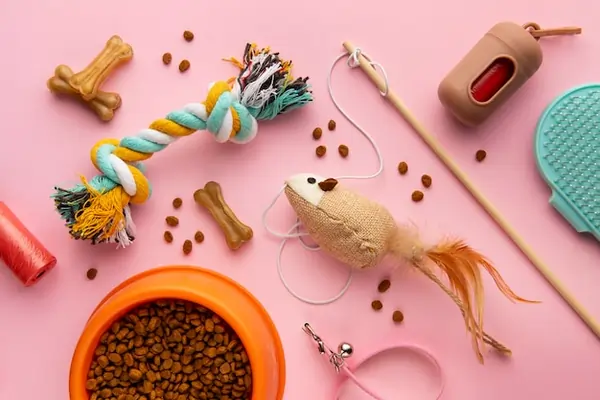
cat accessories are designed to improve the daily care and comfort of domestic cats. Common items include litter boxes, scratching posts, grooming tools, and feeding bowls. These accessories help maintain hygiene and encourage natural behaviors. Choosing quality materials ensures durability and safety. Regular cleaning of accessories is important to prevent odor and infections. Proper setup enhances the overall wellbeing of cats and simplifies pet management.
Cat Accessories – The Complete Guide to Essential Equipment for Indian Cat Owners
Cats are India's rapidly growing favourite companion animal, with millions of cats now sharing homes across the country's urban and semi-urban populations. As cat culture has grown, so has the understanding that cats have specific needs — for appropriate scratching surfaces, for play and hunting behaviour expression, for litter management, for comfortable resting options, and for the variety of environmental enrichment that keeps an indoor cat psychologically stimulated and behaviourally healthy. The range of cat accessories available in India has expanded dramatically to meet this growing market, from the most basic necessities of food bowls and a litter tray to sophisticated interactive toys, multi-level cat trees, automatic feeders, and designer furniture. This comprehensive guide covers all the essential and beneficial cat accessories available to Indian cat owners — what to buy, what to prioritise, what to avoid, and how to make the best choices for your specific cat and household situation in India's diverse living environments.
indian cat ownership encompasses remarkable diversity — from the traditional home cat accustomed to outdoor access in a South Indian independent house to the indoor-only apartment cat in a Mumbai high-rise, from the free-roaming community cat that a family has gradually adopted as their own to the pedigree Persian kept in climate-controlled indoor luxury. The accessories appropriate for each of these contexts differ, and this guide helps Indian cat owners identify the most relevant and most impactful accessories for their specific situation.
Essential Cat Accessories – What Every Indian Cat Owner Needs
Certain cat accessories are essential for every cat owner regardless of household type, cat breed, or keeping philosophy. Food and water bowls — appropriate in material (ceramic or stainless steel are preferable to plastic, which scratches, harbours bacteria, and may cause chin acne through contact with the cat's skin), appropriate in depth (wide and shallow for breeds with flat faces; standard depth for most cats), and positioned in locations that provide the cat with visual access to the room while eating (cats prefer not to eat with their backs to the room for predator detection comfort). Multiple bowls are better than single large bowls for multi-cat households — reducing competition and resource guarding that can create stress in group-living cats.
The litter tray is the most important hygiene accessory for indoor cats and one of the most significant determinants of cat satisfaction and litter-tray use compliance. Indian cat owners who wonder why their cats eliminate outside the tray almost invariably discover a tray-related cause — insufficient tray size, too few trays for the number of cats, wrong litter type, or tray placement in a location that feels unsafe to the cat. The guideline of one tray per cat plus one additional tray (two trays for one cat, three for two cats) reflects the territory-sensitive litter behaviour of cats and significantly reduces elimination problems. Tray size should accommodate the cat with room to turn — a full-grown cat in a standard commercial tray available in India's pet shops often cannot turn comfortably, particularly in covered trays that further restrict movement.
Cat Litter and Litter Tray Selection Guide
| Litter Type | Description | Pros | Cons | Price Range (₹/month) |
|---|---|---|---|---|
| Clumping Clay Litter | Standard clay; forms firm clumps around urine | Easy scooping; widely available India | Dusty; heavy; not eco-friendly | ₹300 – ₹800 |
| Non-clumping Clay | Absorbs without clumping | Very affordable; widely available | Full tray changes needed more often | ₹200 – ₹600 |
| Silica Crystal Litter | Crystal beads absorb moisture and odour | Excellent odour control; low dust | Some cats dislike texture | ₹500 – ₹1,200 |
| Wood Pellet Litter | Compressed sawdust pellets that break down | Natural; eco-friendly; low dust | Requires sifting tray; less familiar in India | ₹400 – ₹900 |
| Tofu / Plant-Based Litter | Made from soybean, corn, or wood fibre | Flushable; natural; low dust | Higher cost; limited Indian availability | ₹600 – ₹1,500 |
Scratching Accessories – Saving Your Furniture
Scratching is an essential natural behaviour for cats — it maintains claw health by removing dead outer claw sheaths, allows scent and visual marking of territory through the scratching surface (cats have scent glands on their paws that deposit their individual signature on scratching surfaces), stretches the muscles of the back, shoulders, and legs, and provides a satisfying physical and emotional outlet. Cats that scratch furniture are not misbehaving — they are performing a biological imperative in the absence of appropriate alternatives. Providing appropriate scratching surfaces eliminates or substantially reduces furniture scratching in most Indian households.
Effective scratching accessories meet the following criteria: they must be tall enough for the cat to fully stretch vertically while scratching (a minimum of 90 cm for most adult cats — many Indian commercial scratch posts are inadequate in height); they must be stable and non-wobbly (cats abandon posts that move when used); they must be appropriately positioned (cats prefer to scratch in prominent locations near sleeping areas and entry/exit points, not tucked in corners out of sight); and they must have appropriate texture (sisal rope or sisal fabric is the most universally accepted scratching material; many cats also accept cardboard scratch pads). Multiple scratching surfaces positioned throughout the home — particularly near the areas where furniture scratching has been observed — provide the most effective furniture-protection strategy. Deterring scratching of furniture with double-sided tape or citrus-scented repellents on specific pieces, combined with redirecting to appropriate scratch surfaces, produces the most effective combined approach for the furniture-scratching problem that is among the most common cat-related complaints from Indian cat owners.
Cat Play and Enrichment Accessories
Cats are obligate carnivores whose natural behaviour repertoire is dominated by hunting — the stalk, pounce, capture, and dispatch sequence that their evolutionary history has optimised across millions of years. Indoor cats with no hunting outlet show the consequences of this behavioural deprivation in ways that range from mild (night-time hyperactivity, redirected play aggression toward household members) to significant (chronic anxiety, obesity from inactivity, destructive behaviour). Play accessories that simulate hunting behaviour — feather wands, mouse-toy attachments, laser pointers, and puzzle feeders — are not optional luxuries but genuine welfare investments that address a fundamental behavioural need.
Interactive play with a human handler using a wand toy — ten to fifteen minutes of active, hunting-simulation play twice daily — is the single most impactful cat enrichment investment available to Indian cat owners. This play session provides the physical exercise, hunting behaviour expression, and human bonding that indoor cats particularly need. The investment is time rather than money; a feather wand of ₹100-300 used consistently provides more welfare benefit than an elaborate automated toy left running without human engagement. Supplement interactive play with independent enrichment including puzzle feeders (food is dispensed as the cat manipulates the feeder, engaging hunting cognition), cardboard boxes and paper bags for exploration, window perches that allow observation of outdoor bird and street activity, and elevated resting spots — cat trees and wall-mounted shelving — that allow expression of the natural feline preference for elevated observation positions.
Cat Grooming Accessories
Grooming accessories serve both hygiene and bonding functions in Indian cat ownership. Short-haired cats groom themselves effectively and require minimal owner grooming intervention — a weekly brush with a soft-bristle brush or rubber grooming glove removes loose hair before it is distributed throughout the home and provides a bonding touch interaction that most cats appreciate. Long-haired breeds including Persians and Maine Coons require daily grooming with a wide-toothed metal comb and a slicker brush to prevent the matting of the long coat that causes discomfort, skin sores, and the expensive and stressful de-matting sessions at veterinary or grooming facilities when mats are allowed to develop. Nail trimming implements — quality cat nail clippers — allow home nail maintenance that prevents the overgrowth that causes claw-related problems and reduces scratching damage to furniture and human skin. Dental care accessories including veterinary-approved enzymatic cat toothpaste and cat toothbrushes address the dental disease that affects the majority of cats over age three — the most commonly under-managed health condition in Indian pet cats.
Cat Carrier and Safety Accessories
A quality cat carrier is an essential safety accessory for every Indian cat owner — necessary for veterinary visits, relocation during household emergencies, and safe transportation. Hard-sided plastic carriers with top-opening doors (in addition to front doors) allow easier removal of non-compliant cats during veterinary examinations. Carriers should be large enough for the cat to stand and turn comfortably — a carrier that the cat can just squeeze into creates stress through confinement. The carrier should be made familiar and non-threatening through year-round presence in the home as a resting option, rather than appearing only when veterinary travel is required — the cat that is placed in its familiar sleeping carrier for transport is significantly calmer than one for whom the carrier's appearance signals an imminent stressful experience.
Monthly Cost of Essential Cat Accessories in India
| Accessory Category | Monthly Cost (₹) | Notes |
|---|---|---|
| Cat Litter (ongoing) | ₹300 – ₹1,200 | Primary ongoing accessory cost; type affects cost significantly |
| Toy Replacement | ₹100 – ₹500 | Rotate toys for continued engagement; replace worn items |
| Grooming Supplies | ₹50 – ₹300 | Brush, dental products; amortised purchase cost |
| Food and Water Bowls (replacement) | ₹50 – ₹200 | Low frequency replacement; ceramic lasts well |
| Scratching Post Replacement | ₹100 – ₹400 | Replace when worn; sisal posts last months to years |
| Total Estimate | ₹600 – ₹2,600 | Litter is the primary ongoing variable; quality affects health |
Frequently Asked Questions About Cat Accessories in India
What litter does most Indian cats prefer? Most cats show preference for fine-grained, unscented clumping litter — the texture and absence of strong fragrance most closely resembles natural soil, which cats in India's climate associate with appropriate elimination. Heavily scented litters, while marketed for odour management, are often rejected by cats whose sense of smell makes strong fragrances aversive rather than pleasant. When introducing a new litter type, transition gradually by mixing increasing proportions of the new litter with the familiar one rather than switching abruptly, as sudden changes often trigger avoidance of the litter tray.
Is a cat tree worth buying for a small Indian apartment? Yes — a cat tree is one of the most impactful welfare investments for apartment-kept Indian cats, providing the elevated observation points, multiple resting levels, and scratching surfaces that simultaneously address three significant cat welfare needs in a single piece of furniture. Even a modest two-level cat tree of 120-150 cm height positioned near a window transforms an apartment cat's daily experience by providing vertical territory that is among the most valued elements of the indoor cat environment.
Should I get a covered or uncovered litter tray for my Indian cat? Most cats prefer uncovered trays — the covered tray, while more aesthetically pleasing for the owner, concentrates odours inside in a way that cats (with their powerful sense of smell) often find aversive. Covered trays also prevent owners from monitoring elimination habits that can indicate urinary or digestive health issues. Many cats will use covered trays without problem, but if a cat shows tray avoidance, removing the cover is among the first management changes to try. Open trays positioned in quiet, accessible locations with regular cleaning (daily scooping, full weekly change) provide the most reliably accepted litter management solution for most Indian cats.
What cat accessories are most important for a kitten? For a kitten under six months: a food-appropriate kitten dish and water bowl; a litter tray with low entry for easy access; a kitten-safe scratch post positioned where the kitten naturally explores; an appropriately sized carrier for veterinary visits; and wand-style interactive toys that stimulate the intense play drive of the kitten period are the priority accessories. Kitten-proofing the home — securing electrical cables, removing toxic plants, blocking access to dangerous spaces — is as important as any purchased accessory for keeping an exploratory, curious kitten safe in an Indian household.
Building an Enriched Indoor Environment for Indian Apartment Cats
The indoor-only cat in an Indian urban apartment faces a particular set of challenges — limited space, limited natural stimulation, and the absence of the outdoor territorial ranging that cats in independent houses or with outdoor access can express. Creating an enriched indoor environment for apartment-dwelling Indian cats requires deliberate, thoughtful accessory selection that maximises the use of available space while addressing the fundamental behavioural needs that space limitation alone does not resolve.
Vertical space is the most impactful environmental enhancement for apartment cats — and it is the dimension most commonly neglected in Indian cat accessory provision. A cat that can access multiple heights through cat trees, wall-mounted shelving, and window perches occupies a three-dimensional territory that is qualitatively different in terms of behavioural richness from the same floor area without vertical options. Several Indian manufacturers and importers now produce modular wall-mounted cat shelving and bridge systems that transform bare walls into cat highways, providing exercise through jumping between levels, elevated observation opportunities, and the territory variety that cats naturally seek in outdoor environments. These systems vary from basic commercial products to creative custom installations that Indian cat owners in architecture and design communities have begun developing as a genuine design category.
Window access is disproportionately valuable as apartment cat enrichment — a window perch positioned to overlook an active street, a garden, or a bird feeder outside provides hours of daily visual stimulation that engages the cat's predatory alertness without any requirement for human interaction. Indian bird feeders placed on balconies or window sills create a daily wildlife television channel for apartment cats that is genuinely enriching and genuinely appreciated. The cat watching birds from a window perch is engaged in a form of hunting behaviour — the stalk, the focused attention, the tail twitch — that satisfies the predatory need in a safe, non-destructive way that is one of the most accessible and most effective enrichment provisions available to Indian apartment cat owners with limited space and budget.
The care investment in appropriate cat accessories — litter management, scratching solutions, play enrichment, vertical space, and the daily interactive play sessions that no accessory can substitute — produces a cat whose quality of life is genuinely excellent even in the constrained context of an Indian urban apartment. That quality of life is visible in the cat's behaviour — the curiosity, the playfulness, the relaxed stretching and comfortable resting, the evening play session engagement that marks a psychologically healthy indoor cat whose needs are being met. Every Indian cat owner who achieves this standard of indoor cat welfare is contributing to a culture of responsible cat ownership that India's rapidly growing cat-keeping community is working to establish as the norm rather than the exception.
The cat that has everything it needs — appropriate nutrition, clean litter management, effective scratching solutions, play enrichment, vertical space, and the daily interactive engagement of its owner — is a cat living a full, stimulating, healthy indoor life that genuinely reflects the quality of care its owner has invested in understanding and providing. That quality of care, visible in the cat's behaviour and demonstrated in its health and longevity, is the highest expression of Indian cat ownership available — and it begins with the knowledge of what cats need, the accessories that provide it, and the daily commitment to doing it well.