Living with a Poodle: what to plan before choosing a puppy
A Poodle can be an engaging companion for a household that enjoys teaching, play and regular coat care. The familiar curly coat is only one part of the decision. Think about the adult dog you will live with, the time you have on an ordinary working day and the support available when your routine changes. A puppy photograph cannot answer those questions for you.
This Poodle guide is for readers comparing dog breeds, puppy enquiries and everyday supplies in Dehradun, with Delhi also covered. It explains size, grooming, food, training and the questions behind a purchase quote. It does not advertise a puppy currently available for sale. Meet the individual dog, check its background and take time to decide rather than paying because a listing looks urgent.
Toy, Miniature and Standard: ask which Poodle you are meeting
The American Kennel Club describes Toy, Miniature and Standard Poodles. These names refer to size varieties rather than three completely different coat types. Other registration systems can use different divisions, so ask which standard a seller is referring to. A generic Poodle weight on a shop card should never be used to predict the adult size of every puppy.
Ask for the puppy’s age, current measurements and information about both parents. A seller’s estimated adult size is still an estimate. Words such as teacup do not provide a health assessment or replace clear records. Choose the individual whose likely adult needs suit your home instead of treating the smallest possible puppy as the most convenient option.
Poodle varieties and practical planning
| Variety | What to clarify | Home planning question |
|---|---|---|
| Toy | Confirm the stated size standard and parental information. | Can everyone handle a small dog gently and safely? |
| Miniature | Discuss likely adult size and individual activity. | Is there room for play, rest and daily training? |
| Standard | Check adult space, transport and handling needs. | Can the household manage a larger active companion? |
| Any variety | Request identity, age, source and care records. | Does the individual fit the household’s daily routine? |
Poodle puppy price in India: compare the whole quote
If you are searching for Poodle puppy price in India, start with the exact puppy and what the quoted amount covers. Size variety, age, source, documented parentage and the arrangements offered may affect an individual quotation. This page has no verified current Poodle sale price, so it does not invent a national range or present a local starting rate as a fact.
Ask for a written breakdown before comparing two offers. Identify any separate transport charge, registration document, existing veterinary record or agreed follow-up. A costly puppy is not automatically healthy, while a low quote does not explain the source or future care commitment. Check the seller’s identity and avoid a deposit until the animal and terms can be verified.
Keep the purchase decision separate from the lifetime budget. Food, grooming, equipment, routine professional care and unexpected expenses continue after the first payment. Adoption may also be worth exploring through a responsible organisation. Whichever route you choose, ask about the individual dog’s needs and the support available during the transition.
Poodle price and ownership cost checklist
| Cost area | Details for a useful current quote |
|---|---|
| Puppy or adoption fee | Identify the individual, source, paperwork and agreed terms. |
| Food | Compare the actual formulation, pack size and feeding guidance. |
| Coat care | Ask about coat condition, service scope and repeat visits. |
| Veterinary appointments | Request an individual plan and estimate from the treating practice. |
| Equipment | List correctly sized walking gear, bed, bowls and carrier. |
| Travel and contingency | Check practical arrangements and keep funds for unexpected needs. |
A curly coat needs a workable grooming routine
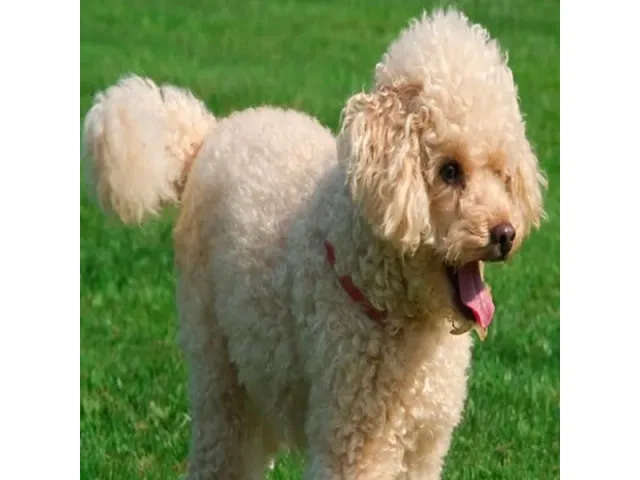
Choose a coat length that the household can maintain comfortably. Ask a groomer to show you how to brush through the coat and check that a comb can pass through it without pulling. Working only over the surface can leave tangles underneath. Pay attention to places where equipment or movement creates friction, and stop if handling causes discomfort.
Professional clipping does not remove the need for care between appointments. Tell the groomer when the dog was last brushed, whether there are knots and how it responds to handling. Request a quote for the actual coat condition rather than assuming a photograph of a haircut defines the whole service. The pet grooming guide can help you prepare those questions.
Introduce the brush, grooming surface and gentle handling in short, calm sessions. Let a puppy learn that standing briefly and having a paw touched can be comfortable experiences. Do not force a long session simply to finish every task. If the dog is distressed or the coat is tightly tangled, seek suitable professional help rather than cutting close to the skin yourself.
Poodle food: start with the individual dog
Keep a record of the food the puppy already eats, its usual mealtimes and any instructions supplied with it. Ask the treating veterinarian about a diet suited to age, condition and expected adult size. A product described as premium is not a complete explanation of suitability. Read the label and keep the exact formulation clear when asking a pet shop about stock.
Before buying a large bag, confirm the product name and pack size. Follow professional guidance for any diet change and ask what to do if the dog does not tolerate a food. Measure portions using the chosen food’s guidance and review them as the animal grows. Fresh drinking water, clean bowls and a predictable feeding space are ordinary essentials.
Treats used in training are part of the overall food intake. Keep rewards small enough for repeated practice and choose items appropriate for the dog. Buying supplements is not a substitute for a suitable diet or an assessment of a concern. For useful equipment, compare the practical options in our dog accessories guide.
Training, activity and learning to settle
A Poodle needs opportunities to use its mind as well as move its body. Build a routine with age-appropriate outings, play, short lessons and quiet rest. A garden alone does not provide a complete daily plan. A puppy will also need frequent toilet opportunities and patient supervision while it learns where to go and what it can chew.
Teach useful skills one at a time: responding to a name, coming when called in a safe space, walking comfortably on a lead and settling on a bed. Reward the behaviour you want and keep requests consistent between family members. If a task is too difficult, make the setting easier instead of repeating a cue more loudly.
Plan gradual practice for spending short periods apart. Start at a level the individual can manage and arrange help when your day would otherwise leave a young dog alone for too long. Discuss persistent difficulty with a suitable professional. The dog training guide explains how to describe your goals before booking support.
A practical Poodle home routine
| Part of the day | Useful focus | What to observe |
|---|---|---|
| Morning | Toilet opportunity, food and suitable activity. | Comfort, appetite and willingness to engage. |
| During the day | Rest, supervised play and short learning sessions. | Whether the dog can settle between activities. |
| Coat care | Brief handling and brushing suited to the coat. | Tangles, sensitivity or difficulty with equipment. |
| Outings | Safe lead practice and manageable new experiences. | The individual’s response rather than distance alone. |
| Evening | Calm family time and preparation for sleep. | A predictable resting place and toilet needs. |
Children, other pets and everyday household life
Manage introductions so the new dog has somewhere quiet to retreat. Children should learn to leave a resting or eating dog alone and to interact gently under adult supervision. A small Poodle should not be treated as a toy to carry around, and a larger one still needs guidance around excited play.
Introduce other animals gradually with appropriate separation and supervision. Do not assume friendliness from a breed description. Watch the individuals and allow enough space to pause. Set up separate resting and feeding resources where needed so the household does not depend on immediate sharing or instant friendship.
Consider ordinary practical details before arrival: a secure doorway, safe storage for household items, washable bedding and a plan for visitors. Agree who handles meals, walks, grooming practice and appointments. The most useful preparation is a routine that remains workable after the first week of excitement.
Before collection: questions worth writing down
| Check | Question to ask |
|---|---|
| Individual identity | Which puppy or adult dog do the records describe? |
| Existing routine | What food, rest and handling arrangements are familiar? |
| Written agreement | What exactly is included and what remains separate? |
| Support | Who should you contact for follow-up questions? |
Records and professional advice before bringing a Poodle home
Request the available veterinary records, identification details, known diet and care history. Ask what relevant parent health screening was done and obtain actual results where available. A reassuring phrase in an advert is not the same as a record that can be checked. An independent veterinary assessment can help clarify questions about the individual puppy.
Discuss size-specific health screening with the veterinarian or relevant breed organisation. Do not assume that one set of tests covers every Poodle variety or that a normal result guarantees future health. Explain any concern clearly and seek appropriate care rather than trying to diagnose it from a breed guide. Keep copies of documents so important details are not lost after collection. The AKC Poodle breed information and Poodle Club of America breed standard provide background on varieties; discuss the individual dog with your veterinarian.
Poodle enquiries in Dehradun and Delhi
For a Poodle enquiry in Dehradun, state whether you need breed information, dog food, grooming equipment or help checking a service arrangement. Delhi enquiries should name the city clearly too. Include the size variety if known, the dog’s age and the exact product or task. This makes an enquiry more useful than asking for everything a Poodle might ever need.
Confirm availability, current prices and practical arrangements directly before travelling or paying. A page about a breed does not confirm puppy stock, a breeding programme or a booked appointment. You can use the enquiry button for routine questions and the contact page for website contact details. Compare the Shih Tzu guide if you are considering another dog with significant coat care needs, and return to the dog breed guide to explore the wider choice.